Showing posts with label University of Sheffield. Show all posts

Monday, December 5, 2016

Quantum dots offer new platform for fingertip terahertz devices


Credit: ITMO University
http://phys.org/news/2016-12-quantum-dots-platform-fingertip-terahertz.html
Scientists from Russia and the U.K. have developed an antenna that can aid in reducing sources of terahertz radiation down to the size of a fingertip. The antenna is a "sandwich" of semiconductor layers combined with quantum dots. The scientists demonstrated that such antennas provide a foundation for a new universal system capable of both transmitting and receiving terahertz radiation. Compact devices, operating at terahertz range, have applications in medicine and biology for tumor visualization and in the aerospace industry for high-speed communication systems. The study was published in Laser & Photonics Reviews.

The  lies between infrared and microwave spectra. Terahertz radiation can penetrate living tissues, but unlike X-rays, is not ionizing and poses no health hazard. Therefore, medical practitioners could benefit immensely from compact  scanners that can obtain pictures of tissues in living organisms.
Researchers from Aston University and ITMO University used  to develop an antenna that can significantly reduce the size of terahertz sources. The work was supported by scientists from the University of Strathclyde and University of Sheffield, as well as TeraVil Ltd company and Center for Physical Sciences and Technology in Vilnius.
"It was a technological challenge," says the study's academic supervisor Edik Rafailov, professor at Aston Institute of Photonic Technologies and leading research associate at ITMO University. "We demonstrated that quantum dots are a good alternative for conventional semiconductors. This new technology gives us an opportunity to generate terahertz at room temperature. And potentially make terahertz devices compact and cheap."


Credit: ITMO University
Today, terahertz generation relies on sources that involve conversion of infrared laser beam into terahertz. The transformation is carried out with intricate systems of waveguides, semiconductor crystals or diodes. The search for alternative ways of generating and detecting  is still underway, but such devices remain bulky, expensive and operate only at low temperatures.
The new antennas make it possible not only to use terahertz sources at room temperature, but also to miniaturize them. "We are able to create very compact sources of  the size of a fingertip," comments leading author of the paper Andrei Gorodetsky, researcher at the Department of Photonics and Optical Information Technology of ITMO University and research associate at Aston Institute of Photonic Technologies. "With the new antennas, we managed to remove the limitation associated with the narrow light spectrum that is used by current converts. This gives us an opportunity to combine the antennas with compact infrared lasers. Additionally, the antennas are 20 times more resistant to damage than typical semiconductor devices. Both factors allow us to incorporate the antenna into the laser instead of setting it apart."


Credit: ITMO University

The researchers suggest that their findings can be used in high-speed communication systems and also in compact terahertz scanners, which would give dynamic imaging of deep skin layers, embryo development, brain processes, and scanning of internal organs or tumors. Terahertz radiation is not harmful, as it does not scatter too much in biological tissues. As a result, terahertz systems are more informative, sensitive and fast compared to their substitutes from other parts of electromagnetic spectrum.


Credit: ITMO University


Credit: ITMO University

Monday, January 25, 2016

Probing how alcohol affects the structure of water

http://atlasofscience.org/probing-how-alcohol-affects-the-structure-of-water/

Water, despite its ubiquity, is an extraordinarily complex substance. The structure of water on a molecular level is defined by the interactions, “hydrogen bonds”, that individual molecules have with each other. These are the reason that upon turning to solid ice, water takes up more space that it does as a liquid. The addition of other substances to water can dramatically alter these interactions and hence the properties of water. The impact of adding alcohols to water is particularly interesting. Not only are alcohol/water mixtures widely used in chemical processes, for example as solvents, but they provide an excellent model system for considering how more complex species such as proteins influence the structure of water. The same interactions also take place in alcoholic beverages where ethanol is mixed with water and hence play a key role in the properties of those, perhaps influencing their flavor.
Fig. 1. Schematic showing a “molecular diffusive jump” of 2-propanol in water.
In order to probe the structure of alcohol/water mixtures it is necessary to apply a range of advanced techniques. In this work we have utilized NMR relaxation time analysis, terahertz time-domain spectroscopy and neutron diffraction. These techniques are ideally suited for probing the structure of alcohol/water structures on the most relevant lengthscales: NMR relaxation time analysis can provide the energy barrier for a molecule to break its interactions with its neighbors and form new ones with other molecules; terahertz time-domain spectroscopy can probe the hydrogen-bonding interactions and give a measure of the average number of water molecules surrounding an alcohol molecule in solution’ while neutron diffraction probes the structure of the solutions, yielding data on the number, type and strength of hydrogen bonds present. The results of this study show that even the addition of a small quantity of alcohol, in this case 2-propanol, has a significant impact on the structure of water.
Fig. 2. Spatial probability densities of 2-propanol (methyl group – green; oxygen – red) and water (blue) at 90 mol % H2O.
Specifically, at a composition ratio of nine water molecules to one 2-propanol molecule, the mixture shows the greatest deviation from ideality; i.e. deviation from what would be expected from a simple additive mixture of the two components. By employing the range of advanced techniques described above we have shown that there are four-to-five water molecules in the immediate surroundings of an alcohol molecule. The alcohol molecules are therefore intimately mixed throughout the water, altering its hydrogen bonding structure and hence its properties. For example, this directly impacts on the mobility of hydrogen through the liquid media – a key step in many chemical processes including hydrogenation reactions; the viscosity of the mixture; and other related properties such as the velocity of sound through the mixture. Figure 1 shows a schematic representation of a 2-propanol molecule moving through water, the energetics of which are directly probed in this study, while Figure 2 shows Spatial probability densities of 2-propanol and water in a 90% water / 10% 2-propanol mixture as derived from neutron diffraction studies.
Understanding the impact of additives, e.g. 2-propanol, has the potential to have a significant impact in any area where water finds application: from catalysis, to fuel cells, to biological processing to alcoholic beverages. The knowledge of the meso-scale structure of such mixtures directly informs the design of such processes and products. A similar approach could be applied to, for example, understand the impact of salts on the structure and dynamics of water. Water surrounds us, and plays a crucial role in supporting life, however we are only now beginning to understand the properties of this highly complex substance.
James McGregor
University of Sheffield

Publication

Structure and dynamics of aqueous 2-propanol: a THz-TDS, NMR and neutron diffraction study.
McGregor J, Li R, Zeitler JA, D’Agostino C, Collins JH, Mantle MD, Manyar H, Holbrey JD, Falkowska M, Youngs TG, Hardacre C, Stitt EH, Gladden LF.
Phys Chem Chem Phys. 2015 Nov 11

Monday, February 2, 2015

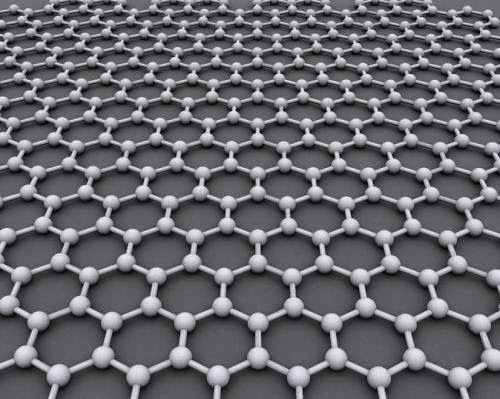
Graphene displays clear prospects for flexible electronics


Credit: AlexanderAlUS/Wikipedia/CC BY-SA 3.0
http://phys.org/news/2015-02-graphene-prospects-flexible-electronics.html


Published in the scientific journal Nature Materials, University of Manchester and University of Sheffield researchers show that new 2D 'designer materials' can be produced to create flexible, see-through and more efficient electronic devices.
The team,  by Nobel Laureate Sir Kostya Novoselov, made the breakthrough by creating LEDs which were engineered on an atomic level.
The new research shows that graphene and related 2D  could be utilised to create light emitting devices for the next-generation of mobile phones, tablets and televisions to make them incredibly thin, flexible, durable and even semi-transparent.
The LED device was constructed by combining different 2D crystals and emits light from across its whole surface. Being so thin, at only 10-40 atoms thick, these new components can form the basis for the first generation of semi-transparent smart devices.
One-atom thick graphene was first isolated and explored in 2004 at The University of Manchester. Its potential uses are vast but one of the first areas in which products are likely to be seen is in electronics. Other 2D materials, such as boron nitiride and molybdenum disulphide, have since been discovered opening up vast new areas of research and applications possibilities.
By building heterostructures - stacked layers of various 2D materials - to create bespoke functionality and introducing quantum wells to control the movement of electrons, new possibilities for graphene based optoelectronics have now been realised.
Freddie Withers, Royal Academy of Engineering Research Fellow at The University of Manchester, who led the production of the devices, said: "As our new type of LED's only consist of a few atomic layers of 2D materials they are flexible and transparent. We envisage a new generation of optoelectronic devices to stem from this work, from simple transparent lighting and lasers and to more complex applications."
Explaining the creation of the LED device Sir Kostya Novoselov said: "By preparing the heterostructures on elastic and transparent substrates, we show that they can provide the basis for flexible and semi-transparent electronics.
"The range of functionalities for the demonstrated heterostructures is expected to grow further on increasing the number of available 2D crystals and improving their electronic quality."
Prof Alexander Tartakovskii, from The University of Sheffield added: "The novel LED structures are robust and show no significant change in performance over many weeks of measurements.
"Despite the early days in the raw materials manufacture, the quantum efficiency (photons emitted per electron injected) is already comparable to organic LEDs."
More information: Light-emitting diodes by band-structure engineering in van der Waals heterostructures, DOI: 10.1038/nmat4205


Read more at: http://phys.org/news/2015-02-graphene-prospects-flexible-electronics.html#jCp