Showing posts with label Dr. Christopher Walker. Show all posts

Friday, February 10, 2012

Stratospheric Terahertz Observatory (STO) surveys violent, star-making clouds of Milky Way Galaxy


Photo Credit: Christopher Walker Stratospheric Terahertz Observatory is prepared for launch from the Long Duration Balloon facility on the McMurdo Ice Shelf in January 2012. The telescope carried high-tech "radios" to tune into the violent dust clouds from where stars are born in galaxies.

http://www.spaceref.com/news/viewsr.html?pid=39805

Peter Rejcek, Antarctic Sun Editor: "All we are is dust in the wind." So sang the 1970s rock band Kansas for its peaceful, philosophical ballad about mortality. But the place from where the clouds of cosmic dust and gas blow that eventually forms stars and planets -- and, by extension, us -- is far less idyllic.

"These clouds of dust and gas aren't gently moving around. This is a very violent, nasty place in the interstellar medium. Terrible things are happening. Things are being ripped apart; gravity is shoving stuff together," said Christopher Walker , about six weeks before his team launched a giant balloon from Antarctica high into the Earth's atmosphere carrying a very special type of high-frequency radio.

The Stratospheric Terahertz Observatory (STO) won't be tuning into Kansas' greatest hits. Instead, it will pick up the faint, high-frequency radio signals emitted by carbon atoms within those violent interstellar clouds of gas and dust that are found in the Milky Way Galaxy.

"These clouds are actually made out of the debris of supernovas that went off long before the sun ever existed," Walker said. In turn, remnants from those explosions eventually coalesced -- or collapsed -- to form the sun. The planets were byproducts of the sun's formation.

It's an interstellar evolution -- birth, death and rebirth -- that still goes on today in this and other galaxies. The clouds in what astronomers call the interstellar medium, the matter that exists in the space between the star systems in a galaxy, play a key role in the process.

"In order to understand the lifecycle of all of this gas and dust in the Milky Way that goes from gas and dust to stars, back to gas and dust, back to stars, the formation of planets, we need to understand how these clouds of gas and dust form -- how long are they in this phase," Walker explained. "No one really knows. ... We can learn a lot just by listening to the faint radio signals coming from these atoms and molecules about what is going on out there."

A professor of astronomy at the University of Arizona , Walker is the principal investigator on the NASA -funded project, which is also supported by the National Science Foundation (NSF) through the U.S. Antarctic Program . The project includes a number of investigators and institutions, including the University of Arizona, Johns Hopkins University Applied Physics Laboratory (APL) , NASA's Jet Propulsion Lab , the University of Cologne in Germany, Arizona State University and Caltech .

STO is a balloon-borne observatory, using the same gondola and telescope that Johns Hopkins APL investigators had previously used for solar astronomy. It was launched Jan. 15 from the Long Duration Balloon (LDB) facility located on an ice shelf near McMurdo Station . It spent two weeks circling the Antarctic, thanks to a summertime vortex that moves over the continent during this time of year. STO flew in the stratosphere at around 125,000 feet or more -- about three times as high as commercial aircraft fly.

"We're halfway to space," noted Tony Stark, a co-principal investigator on the project and an astronomer at the Smithsonian Astrophysical Observatory . He also pioneered radio astronomy at the South Pole Station , particularly as the lead investigator on the Antarctic Submillimeter Telescope and Remote Observatory (AST/RO) Link to PDF file , a 1.7-meter diameter telescope that operated at the Pole for more than a decade.

A vehicle used in the balloon launches is parked outside of the two LDB hangar buildings.

"We were the first really successful winter experiment at the Pole," said Stark while sitting in the crowded mezzanine of the balloon hangar. "When we started, people said it couldn't be done. It was almost true. It was really difficult."

The science goals were similar -- investigations into the nature of the interstellar medium lifecycle. More than 100 papers were based on data from AST/RO, including the discovery that most galaxies experience sudden star-forming periods, or starburst, every 20 million years, based on observations of dust clouds in the center of the Milky Way Galaxy.

Eventually, AST/RO maxed out in terms of the frequencies it could detect through the high and dry atmosphere at the South Pole.

"It's water vapor that's our enemy. It absorbs the light we're trying to detect. The South Pole is good up to a certain frequency, and after that you need to get above everything," explained Walker, who made eight trips to Antarctica for the AST/RO experiment.

Enter STO, which sports the "most complicated high-frequency radios on Earth right now," according to Walker. The long-duration balloon carried the roughly two tons of gondola, telescope, radio receivers and associated gadgetry to the fringes of the Earth's atmosphere where interference from water vapor is far less of a problem.

The researchers believe the balloon platform will give them plenty of bang for the buck. A space-based mission would have cost at least $120 million when the team first proposed the project in 2007, according to Walker. The STO experiment will cost about one-twentieth of that.

The gondola carries two star cameras so the team knows which part of the Milky Way the telescope is pointing. It also boasts three gyroscopes to provide an inertial guidance system so the astronomers can point it to the places in the galaxy they want to map. Large solar panels provide the kilowatt of power needed to run the small, robotic observatory.

An onboard cryogenic system uses liquid helium to cool the ultra-high frequency radio receivers down to just a few degrees above absolute zero. There is also a receiver that can operate at atmospheric temperatures.

"This thing has all of the features and subsystems of an orbiting spacecraft," Walker said. "No one has yet put these kinds of detectors on the back of a balloon-borne telescope."

The team already has a proposal into NASA to build a new version of the gondola and telescope to probe even deeper into the Milky Way and other nearby galaxies, such as the Large Magellanic Cloud.

Dubbed GUSSTO, for Galactic/extragalactic Ultra/LDB Spectroscopic/Stratospheric Terahertz Observatory (GUSSTO), the one-meter telescope would fly on one of NASA's newly designed super-pressure balloons that can stay aloft for 100 days or more.

"STO is unique in what it can do, and it's also a precursor to GUSSTO, which we hope to start next year," Walker said. "It fills in a big gap in our knowledge of the lifecycle of galaxies like our Milky Way."

Friday, April 22, 2011

Stratospheric Terahertz Observatory


Columbia Scientific Balloon Facility LogoImage via Wikipedia
MY NOTE: THIS IS NOT A NEW STORY, BUT NEW TO ME, AND IT'S VERY INTERESTING. I DIDN'T KNOW THIS WAS GOING ON IN MY CORNER OF THE WORLD.

Details of the balloon and launch operations

Launch site: Scientific Flight Balloon Facility, New Mexico, US  
  Launch team: CSBF (Columbia Scientific Balloon Facility) Balloon: Open balloon (zero pressure) Volume:   Serial number: -Flight identification number: 603N Campaign: No Data
Payload weight: - Gondola weight: -Overall weight: -
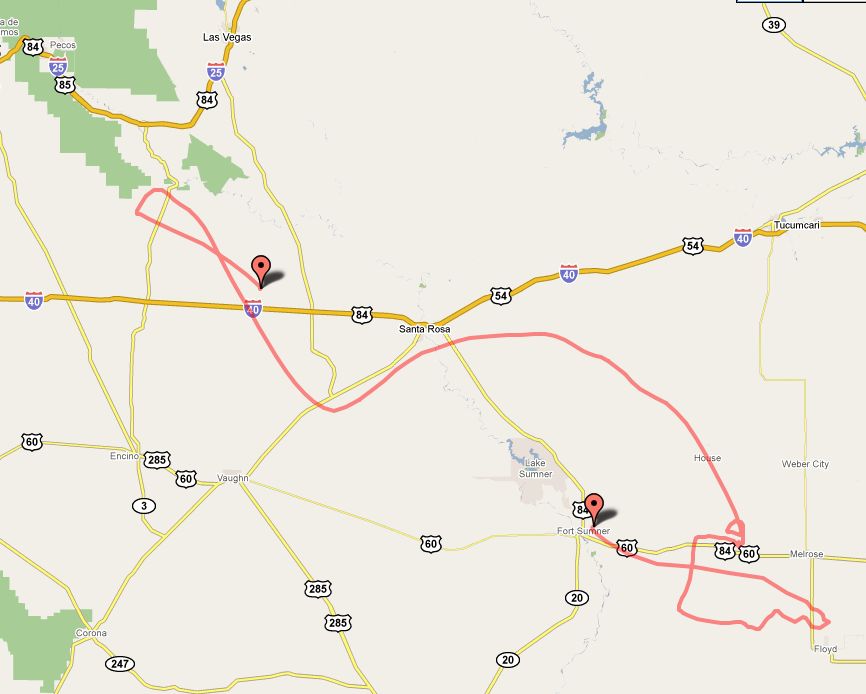
The balloon was launched by dynamic method using the Big Bill launch vehicle at 16:00 utc on October 15. After a nominal climbing phase it reached float altitude of 125.000 ft. at 18:05 utc starting a drifting route mainly to the northwest. At right can be seen the complete trajectory of the balloon (click to enlarge).

The flight endured until 6:25 utc of October 16 when the payload was separated from the balloon, landing 42 kms. West of Santa Rosa, New Mexico.

The total flight time was near 14 hours.


Description of the payload or experiment

STO (Stratospheric Terahertz Observatory)

Responsable institution:  University of Arizona / Johns Hopkins University Applied Physics Lab / NASA AMES Research Center / Jet Propulsion Laboratory / California Institute of Technology / Oberlin College / University of Maryland / Universitaet zu Koeln (Germany)
Principal Investigator:  Dr. Christopher K.Walker

The Stratospheric Terahertz Observatory (STO) is a NASA-funded long duration balloon (LDB) experiment designed to address a key problem in modern astrophysics: understanding the life cycle of star-forming molecular clouds in our Milky Way Galaxy.

To accomplish this goal, STO will survey a section of the Galactic Plane in the luminous interstellar cooling line at 158 microns (1.90 THz) and the important star-formation and ionized gas tracer at 205 microns (1.45 THz). The 4-pixel heterodyne receiver arrays on board STO possess the sensitivity and spectral resolution needed to see molecular clouds in the process of formation, measure the rate of evaporation of molecular clouds and separate the bulk motion of gas in our Galaxy from local kinematic effects. STO's 0.8m telescope provides ~1' spatial resolution, providing more than two orders of magnitude improvement in spatial resolution over existing data. By building a three-dimensional picture of the interstellar medium of the Galaxy, STO will be able to study the creation and disruption of star-forming clouds in the Galaxy, determine the parameters that govern the star formation rate, and provide a template for star formation and stellar/interstellar feedback in other galaxies.

STO is conformed by a telescope, eight heterodyne receivers (four for each line to be observed) , an eight-channel Fieldable Fourier Transform Spectrometer System , control electronics , an hybrid He cryostat, and a precision gondola. At left can be seen a scheme of the STO in full configuration.

STO uses the same telescope that Johns Hopkins University Applied Physics Laboratory has previously employed for its successful Flare Genesis Experiment (FGE). The primary mirror is an 80-cm diameter, f/1.5 hyperboloid made of Ultra Low Expansion titanium silicate glass (ULE), and honeycombed to a weight of just 50 kg. Its surface is polished to visible-band optical quality, therefore over-specified for imaging in the 100 to 200 micron wavelength range. Its support and spider arms are made of light weight graphite-epoxy, which provides high thermal stability over a wide range of temperatures. A tertiary chopper is located near the backside of the main mirror on a counterbalanced mount to minimize reaction forces. A calibration box located between the telescope and the receiver cryostat places blackbody loads at known temperatures in the path of the detectors for comparison, allowing to determine the detector noise, the telescope efficiency, the opacity of the atmosphere and the absolute flux of astronomical sources.

The receivers are fed by the beam entering the telescope which first encounters a free-standing wire grid that divides the incident light into horizontal and vertical polarization components. One polarization passes through the grid into the first vacuum window while the other reflects off a 45º mirror and enters a second vacuum window. The vacuum windows and subsequent 77, 25, and 4K IR filters are made from low-loss, AR coated, single crystal quartz. The first flight receiver will consist of two, orthogonally polarized 1x4 arrays of superconductive hot-electron bolometer (HEB) mixers operating at 4º Kelvin. One array optimized for the 1.90 THz line and the other for the 1.46 THz line. The mixers will be pumped by two, frequency tunable, solid-state Local Oscillators (LO's).

A flight instrument electronics box houses several boards that control the spectrometer, the LO/HEB/LNA bias board, the calibration flip mirror, and the instrument computer.

To cool the mixer arrays, STO uses a 200 liter liquid helium cryostat. An off-the-shelf mechanical refrigerator cools the first radiation shield to 77K while the second one will be vapor-cooled to 25K.

STO will rely entirely on the NASA-CSBF provided remote link to/from the gondola for the communications between the experiment and the ground. For the long duration balloon mission in Antarctica that will be acomplished through the NASA's Tracking and Data Relay Satellite System (TDRSS) while in the moment that the balloon traverses a zone where none of the TDRSS satellites are in view, a backup link using the Iridium satellite system will be available.

As occurred with the telesciçope, the gondola is inherited from the APL which developed it in the framework in the Flare Genesis and Solar Bolometric Imager balloon programs, that performed two test flights in New Mexico and three long duration balloon Antarctic flights. The structure carries and protects the telescope and instrument, the command and control systems, and the power system. Its basic dimensions (without solar arrays) are: 2m wide, 1.5m deep, and 4.5m high. The frame is made of standard aluminum angles bolted together and painted with a white thermal coating. The structure is strong enough to support up to 2000 kg even under the 10 g shock experienced at the end of the flight when the parachute inflates. It is rigid enough to allow the required telescope pointing stability. The gondola can be separated into lighter components for easy post-flight retrieval in the field.


Performance in flight and data obtained


This engineering prototype of STO was planned to be performed in CONUS with a flight duration less than 24 hours. The instrument configuration consisted of a liquid helium dewar supporting operation of an HEB mixer in each of the 1.4 and 1.9 THz bands, in addition to an ambient-temperature Schottky receiver operating at 330 GHz.

The first scientific flight of the instrument in the full fledged configuration will take place in the Long Duration Balloon campaign to be held at McMurdo Antarctica in end 2010, begin 2011.


External references and bibliographical sources


THE FOLLOWING PDF IS A MORE RECENT DESCRIPTION OF THIS WORK.
http://www.jhuapl.edu/techdigest/TD/td2803/20Bernasconi.pdf

Enhanced by Zemanta