Showing posts with label U. Morgner. Show all posts

Tuesday, May 21, 2019

Abstract-Unusual terahertz waveforms from a resonant medium controlled by diffractive optical elements


A. V. Pakhomov, R. M. Arkhipov, M. V. Arkhipov, A. Demircan, U. Morgner, N. N. Rosanov,  I. Babushkin,
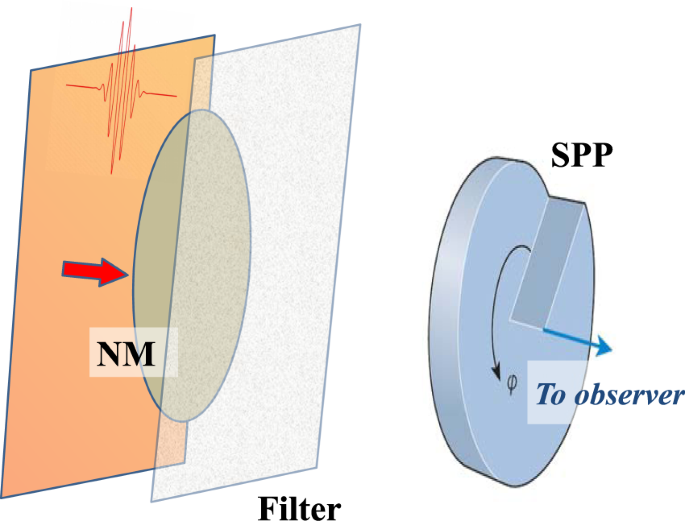
figure7

https://www.nature.com/articles/s41598-019-43852-w

Up to now, full tunability of waveforms was possible only in electronics, up to radio-frequencies. Here we propose a new concept of producing few-cycle terahertz (THz) pulses with widely tunable waveforms. It is based on control of the phase delay between different parts of the THz wavefront using linear diffractive optical elements. Suitable subcycle THz wavefronts can be generated via coherent excitation of nonlinear low-frequency oscillators by few-cycle optical pulses. Using this approach it is possible to shape the electric field rather than the slow pulse envelope, obtaining, for instance, rectangular or triangular waveforms in the THz range. The method is upscalable to the optical range if the attosecond pump pulses are used.

Friday, March 23, 2018

Abstract-All-optical attoclock: accessing exahertz dynamics of optical tunnelling through terahertz emission


The hot debate regarding attosecond dynamics of optical tunneling has, so far, been focused on the presence, or absence, of time delays associated to the electron tunnelling through the classically forbidden region during atomic ionization in intense infrared laser fields. Strong theoretical and experimental arguments have been put forward to advocate the polar opposite points of view. The underlying dynamics are richer. Here we propose to use the nonlinear optical responses of the tunnelling electrons to tailored light fields to track these dynamics in full complexity. Using the combination of single-color and two-color fields, we resolve not only ionization delays, but also temporal re-shaping and spatial re-focusing of the tunnelling wavepacket as it emerges from the classically forbidden region. Access to these details of the dynamics is facilitated by the near-instantaneous nature of the nonlinear optical response driven by ionization, and by using tailored laser pulses to induce this response. Our work introduces a new type of attoclock for optical tunnelling, one that is based on measuring light rather than photo-electrons. Our conclusions suggest a possible middle ground between the two conflicting points of view.


Sunday, December 24, 2017

Abstract-Polarization control of terahertz radiation from two-color femtosecond gas breakdown plasma


O. Kosareva, M. Esaulkov, N. Panov, V. Andreeva, D. Shipilo, P. Solyankin, A. Demircan, I. Babushkin, V. Makarov, U. Morgner, A. Shkurinov, and A. Savel’ev

http://www.etoponline.org/ol/abstract.cfm?uri=ol-43-1-90

We individually control polarizations of 800 and 400 nm beams, which form a two-color femtosecond plasma filament in air irradiating a linear-to-elliptical THz signal. We detected a threshold-like appearance of THz ellipticity at the angle of 85° between the fundamental and second-harmonic field polarization directions. The simulations confirm the abrupt change of THz polarization and reveal that the weak ellipticity of the second harmonic is sufficient to generate essentially elliptical THz radiation.
© 2017 Optical Society of America

Thursday, December 21, 2017

Abstract-Symmetry Breaking and Strong Persistent Plasma Currents via Resonant Destabilization of Atoms


C. Brée, M. Hofmann, A. Demircan, U. Morgner, O. Kosareva, A. Savel’ev, A. Husakou, M. Ivanov, and I. Babushkin


The ionization rate of an atom in a strong optical field can be resonantly enhanced by the presence of long-living atomic levels (so-called Freeman resonances). This process is most prominent in the multiphoton ionization regime, meaning that the ionization event takes many optical cycles. Nevertheless, here, we show that these resonances can lead to rapid subcycle-scale plasma buildup at the resonant values of the intensity in the pump pulse. The fast buildup can break the cycle-to-cycle symmetry of the ionization process, resulting in the generation of persistent macroscopic plasma currents which remain after the end of the pulse. This, in turn, gives rise to a broadband radiation of unusual spectral structure, forming a comb from terahertz to visible. This radiation contains fingerprints of the attosecond electron dynamics in Rydberg states during ionization.
  • Figure
  • Figure
  • Figure
  • Figure
  • Figure
  • Figure

Friday, October 6, 2017

Abstract-Passive mode locking in a multi-section quantum cascade laser: towards few-cycle terahertz pulses


It is believed that passive mode locking is virtually impossible in quantum cascade lasers (QCLs) because of too fast carrier relaxation time. Here, we revisit this possibility and theoretically show that stable mode locking and pulse durations in the few cycle regime at terahertz (THz) frequencies are possible in suitably engineered bound-to-continuum QCLs. We achieve this by utilizing a multi-section cavity geometry with alternating gain and absorber sections. The critical ingredient is the very strong coupling of the absorber to both field and environment. Under this condition, even if the gain relaxation time is several times faster than the round trip time, generation of few-cycle pulses is feasible. We investigate parametric regimes where fundamental and second harmonic mode locking can be observed both via numerical simulation and analytical calculations.

Wednesday, May 6, 2015

Abstract-Boosting Terahertz Generation in Laser-Field Ionized Gases Using a Sawtooth Wave Shape


P. González de Alaiza Martínez, I. Babushkin, L. Bergé, S. Skupin, E. Cabrera-Granado, C. Köhler, U. Morgner, A. Husakou, and J. Herrmann
Phys. Rev. Lett. 114, 183901 – Published 6 May 2015
http://journals.aps.org/prl/abstract/10.1103/PhysRevLett.114.183901
Broadband ultrashort terahertz (THz) pulses can be produced using plasma generation in a noble gas ionized by femtosecond two-color pulses. Here we demonstrate that, by using multiple-frequency laser pulses, one can obtain a waveform which optimizes the free electron trajectories in such a way that they acquire the largest drift velocity. This allows us to increase the THz conversion efficiency to 2%, an unprecedented performance for THz generation in gases. In addition to the analytical study of THz generation using a local current model, we perform comprehensive 3D simulations accounting for propagation effects which confirm this prediction. Our results show that THz conversion via tunnel ionization can be greatly improved with well-designed multicolor pulses.
  • Figure
  • Figure
  • Figure

Tuesday, December 16, 2014

Abstract-Boosting terahertz generation in laser-field ionized gases using a sawtooth wave shape


Broadband ultrashort terahertz (THz) pulses can be produced using plasma generation in a noble gas ionized by femtosecond two-color pulses. Here we demonstrate that, by using multiple-frequency laser pulses, one can obtain a waveform which optimizes the free electron trajectories in such a way that they reach the highest velocity at the electric field extrema. This allows to increase the THz conversion efficiency to the percent level, an unprecedented performance for THz generation in gases. Besides the analytical study of THz generation using a local current model, we perform comprehensive 3D simulations accounting for propagation effects which confirm this prediction. Our results show that THz conversion via tunnel ionization can be greatly improved with well-designed multicolor pulses.