Showing posts with label Edmund Linfield. Show all posts

Saturday, June 8, 2019

New Director for Bragg Centre for Materials Research

New Director for Bragg Centre for Materials Research
https://www.leeds.ac.uk/news/article/4424/new_director_for_bragg_centre_for_materials_research
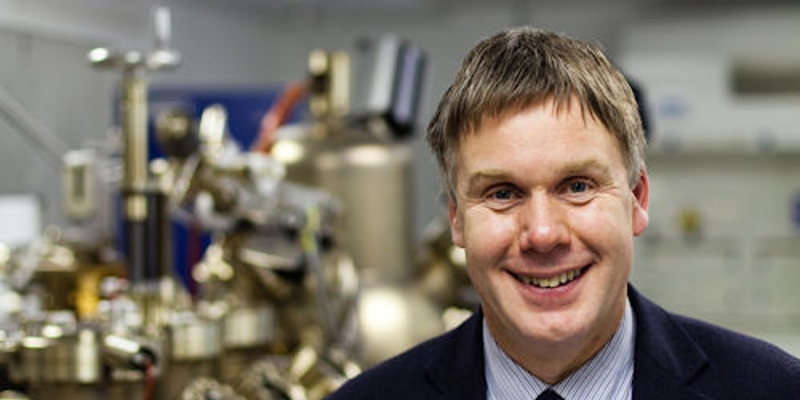
The University has appointed Professor Edmund Linfield as the first Director for the Bragg Centre for Materials Research.
Currently Chair of Terahertz Electronics at Leeds, Professor Linfield has helped establish the University as a global leader in terahertz technology.
Together with Professor Giles Davies, he was awarded the Institute of Physics Faraday Gold Medal in 2014 for his work in experimental physics.

“Professor Linfield is an outstanding appointment, with a proven track record of leading internationally-renowned research.”

                             PROFESSOR LISA ROBERTS

Materials research

The Bragg Centre has been created to enable unprecedented advances in the discovery, creation and design of new materials. 
I’m very excited to see what discoveries can be made in the coming years by the incredibly talented researchers we have here at Leeds.”
                           PROFESSOR EDMUND LINFIELD
Professor Linfield said: “We advance our understanding of high-value materials through a combination of both fundamental scientific discovery and applied research, exploiting materials that are often engineered at the atomic or molecular level. We also work with industry to understand and tackle their problems.
“These challenges demand that academics work across disciplines, so the Centre brings together leaders from interconnected fields to address global problems in materials research.
“I am very excited to see what discoveries can be made in the coming years by the incredibly talented researchers we have here at Leeds.”
The Bragg Centre’s facilities, available for use by industry and academia, provide advanced capabilities for growth, fabrication, analysis and characterisation of materials.
Our state-of-the-art experimental and analytical facilities rival the best in the UK and it is this combination of capabilities and expertise that makes Leeds special.”
PROFESSOR LISA ROBERTS
A number of the facilities have been supported and funded by the Henry Royce Institute, the UK’s centre for advanced materials research and innovation.
The Royce, a government-funded, national facility, provides funding and access to facilities, aiming to support the UK manufacturing base and reduce the time to take new materials from invention to market.
The University is a founding partner of the Royce, and Professor Linfield embodies the strong relationship between Bragg and Royce with his role as academic champion for Royce’s ‘Atoms to Devices’ research theme.

Exceptional research strengths 

Professor Lisa Roberts, Deputy Vice-Chancellor: Research and Innovation at the University and a Board member of the Royce, said: “Professor Linfield is an outstanding appointment, with a proven track record of leading internationally-renowned research.
“Our state-of-the-art experimental and analytical facilities rival the best in the UK and it is this combination of capabilities and expertise that makes Leeds special.
“Through Bragg, Royce and our innovation hub, Nexus, we work closely with industry to enable the commercialisation of fundamental research, and in doing so, help play a critical role in tackling the research and development challenges set by the government’s strategies.
“I am very much looking forward to working with Edmund to develop our exceptional research strengths, ensuring the University continues to be a partner of choice for collaboration, for pioneering fundamental discoveries, and for addressing applications in industry.”

Sir William Henry Bragg Building 

The Bragg Centre will be based in the new Sir William Henry Bragg Building, which is due to be completed in Autumn 2020.
It is part of the University’s £96 million investment in Engineering and Physical Sciences.
The investment is creating an exceptional environment for students, and supports researchers from across engineering and physical sciences to work together to solve fundamental problems and tackle key industrial challenges. 

Bragg Centre focus 

The Bragg Centre for Materials Research is focusing its attention on six key areas:
 · Analytical science
· Bionanotechnology
· Electronic and photonic materials
· Functional surfaces
· Multiscale materials
· Soft matter
We are creating an incredibly vibrant PhD, postdoctoral and academic fellows community.”
PROFESSOR EDMUND LINFIELD
Professor Linfield added: “We are creating an incredibly vibrant PhD, postdoctoral and academic fellows community here, attracting researchers from across the world to work at the forefront of these interconnected fields.
“By bringing together such a range of academics working on materials research at the University, we hope to expand rapidly our international impact.”

Tuesday, August 14, 2018

Terahertz technology creates new insight into how semiconductor lasers work


https://www.sciencedaily.com/releases/2018/08/180813125241.htm

Pioneering engineers working with terahertz frequency technology have been researching how individual frequencies are selected when a laser is turned on, and how quickly the selection is made.
The development of specific terahertz equipment has allowed them to investigate this process for the first time. Their results, published in Nature Communications, will underpin the future development of semiconductor lasers, including those used in public and private sector-owned telecommunications systems.
For many years, it has been predicted that operating frequencies within semiconductor lasers stabilise on a timescale of a few nanoseconds (ie a few billionths of a second) and can be changed within a few hundreds of picoseconds (ie thousandths of a nanosecond).
Until now, though, no detector has been capable of measuring and proving this precisely, and the best results have only been achieved on nanosecond timescales, which are too slow to allow really efficient analysis or to be used to develop the most effective new systems.
The University of Leeds researchers, working with international colleagues at École Normal Supérieure in Paris, France and the University of Queensland in Brisbane, Australia have now used terahertz frequency quantum cascade lasers and a technique called terahertz time-domain spectroscopy to understand this laser stabilisation process.
The terahertz-powered technology can measure the wavelength of light in periods of femtoseconds (ie millionths of a nanosecond) giving unprecedented levels of detail. By knowing the speed at which wavelengths change within lasers, and what happens during that process within miniscule time frames, more efficient devices and systems can be built.
The Leeds elements of the study were carried out in the University's Terahertz Photonics Laboratory, part of the University's Bragg Centre for Materials Research.
Dr Iman Kundu, principal author of the research paper explaining the group's findings, said: "We've exploited the ultrafast detection capabilities of terahertz technology to watch laser emissions evolve from multiple colours to a single wavelength over less than a billionth of a second.
"Now that we can see the detailed emission of the lasers over such incredibly small time frames, we can see how the wavelength of light changes as one moves from one steady state to a new steady state.
"The benefits for commercial systems designers are potentially significant. Terahertz technology isn't available to many sectors, but we believe its value lies in being able to highlight trends and explain the detailed operation of integrated photonic devices, which are used in complex imaging systems which might be found in the pharmaceutical or electronics sectors.
"Designers can then apply these findings to lasers operating at different parts of the electromagnetic spectrum, as the underlying physics will be very similar."
Professor Edmund Linfield, Chair of Terahertz Electronics at the University of Leeds, who was also involved in the study said: "We're using the highly advanced capabilities of terahertz technology to shine a light on the operation of lasers.
"Our research is aimed at showing engineers and developers where to look to drive increased performance in their own systems. By doing this, we will increase the global competitiveness of the UK's science and engineering base."
Story Source:
Materials provided by University of Leeds. Note: Content may be edited for style and length.

Journal Reference:
  1. Iman Kundu, Feihu Wang, Xiaoqiong Qi, Hanond Nong, Paul Dean, Joshua R. Freeman, Alexander Valavanis, Gary Agnew, Andrew T. Grier, Thomas Taimre, Lianhe Li, Dragan Indjin, Juliette Mangeney, Jérôme Tignon, Sukhdeep S. Dhillon, Aleksandar D. Rakić, John E. Cunningham, Edmund H. Linfield, A. Giles Davies. Ultrafast switch-on dynamics of frequency-tuneable semiconductor lasers. Nature Communications, 2018; 9 (1) DOI: 10.1038/s41467-018-05601-x

Sunday, February 4, 2018

Abstract-Terahertz emission from localized modes in one-dimensional disordered systems [Invited]


Yongquan Zeng, Guozhen Liang, Bo Qiang, Bo Meng, Hou Kun Liang, Shampy Mansha, Jianping Li, Zhaohui Li, Lianhe Li, Alexander Giles Davies, Edmund Harold Linfield, Ying Zhang, Yidong Chong, and Qi Jie Wang

https://www.osapublishing.org/prj/abstract.cfm?uri=prj-6-2-117&origin=search

We demonstrate terahertz (THz) frequency laser emission around 3.2 THz from localized modes in one-dimensional disordered grating systems. The disordered structures are patterned on top of the double-metal waveguide of a THz quantum cascade laser. Multiple emission peaks are observed within a frequency range corresponding to the bandgap of a periodic counterpart with no disorder, indicating the presence of mode localization aided by Bragg scattering. Simulations and experimental measurements provide strong evidence for the spatial localization of the THz laser modes.
© 2018 Chinese Laser Press

Saturday, August 5, 2017

Abstract-Measurement of the emission spectrum of a semiconductor laser using laser-feedback interferometry


    https://www.nature.com/articles/s41598-017-07432-0?WT.feed_name=subjects_chemistry

    The effects of optical feedback (OF) in lasers have been observed since the early days of laser development. While OF can result in undesirable and unpredictable operation in laser systems, it can also cause measurable perturbations to the operating parameters, which can be harnessed for metrological purposes. In this work we exploit this ‘self-mixing’ effect to infer the emission spectrum of a semiconductor laser using a laser-feedback interferometer, in which the terminal voltage of the laser is used to coherently sample the reinjected field. We demonstrate this approach using a terahertz frequency quantum cascade laser operating in both single- and multiple-longitudinal mode regimes, and are able to resolve spectral features not reliably resolved using traditional Fourier transform spectroscopy. We also investigate quantitatively the frequency perturbation of individual laser modes under OF, and find excellent agreement with predictions of the excess phase equation central to the theory of lasers under OF.

    Friday, April 28, 2017

    Abstract-Terahertz generation mechanism in nano-grating electrode photomixers on Fe-doped InGaAsP


    Reshma A. Mohandas, Joshua R. Freeman, Michele Natrella, Mark C. Rosamond, Lalitha Ponnampalam, Martyn J. Fice, Alwyn J. Seeds, Paul. J. Cannard, Michael. J. Robertson, David. G. Moodie, A. Giles Davies, Edmund H. Linfield, and Paul Dean

    https://www.osapublishing.org/oe/abstract.cfm?uri=oe-25-9-10177

    We report the generation mechanism associated with nano-grating electrode photomixers fabricated on Fe-doped InGaAsP substrates. Two different emitter designs incorporating nano-gratings coupled to the same broadband antenna were characterized in a continuous-wave terahertz (THz) frequency system employing telecommunications wavelength lasers for generation and coherent detection. The current-voltage characteristics and THz emission bandwidth of the emitters is compared for different bias polarities and optical polarisations. The THz output from the emitters is also mapped as a function of the position of the laser excitation spot for both continuous-wave and pulsed excitation. This mapping, together with full-wave simulations of the structures, confirms the generation mechanism to be due to an enhanced optical electric field at the grating tips resulting in increased optical absorption, coinciding with a concentration of the electrostatic field.
    Published by The Optical Society under the terms of the Creative Commons Attribution 4.0 License. Further distribution of this work must maintain attribution to the author(s) and the published article's title, journal citation, and DOI.

    Sunday, December 11, 2016

    Abstract-Optical feedback effects on terahertz quantum cascade lasers: modelling and applications


    Aleksandar D. Rakić, Yah Leng Lim, Thomas Taimre, Gary Agnew, Xiaoqiong Qi, Karl Bertling, She Han, Stephen J. Wilson
    The Univ. of Queensland (Australia)
    Andrew Grier, Zoran Ikonić, Alexander Valavanis, Aleksandar Demić, James Keeley, Lianhe H. Li, Edmund H. Linfield, A. Giles Davies, Dragan Indjin
    Univ. of Leeds (United Kingdom)
    Paul Harrison
    Sheffield Hallam Univ. (United Kingdom)
    Blake Ferguson, Graeme Walker
    QIMR Berghofer Medical Research Institute (Australia)
    Tarl W. Prow, H. Peter Soyer
    The Univ. of Queensland School of Medicine (Australia)
    Proc. SPIE 10030, Infrared, Millimeter-Wave, and Terahertz Technologies IV, 1003016 (December 8, 2016); doi:10.1117/12.2250621


    http://proceedings.spiedigitallibrary.org/proceeding.aspx?articleid=2593076


    Terahertz (THz) quantum cascade lasers (QCLs) are compact sources of radiation in the 1–5 THz range with significant potential for applications in sensing and imaging. Laser feedback interferometry (LFI) with THz QCLs is a technique utilizing the sensitivity of the QCL to the radiation reflected back into the laser cavity from an external target. We will discuss modelling techniques and explore the applications of LFI in biological tissue imaging and will show that the confocal nature of the QCL in LFI systems, with their innate capacity for depth sectioning, makes them suitable for skin diagnostics with the well-known advantages of more conventional confocal microscopes. A demonstration of discrimination of neoplasia from healthy tissue using a THz, LFI-based system in the context of melanoma is presented using a transgenic mouse model.
     © (2016) COPYRIGHT Society of Photo-Optical Instrumentation Engineers (SPIE). Downloading of the abstract is permitted for personal use only.

    Friday, December 2, 2016

    Abstract-Extraction-controlled terahertz frequency quantum cascade lasers with a diagonal LO-phonon extraction and injection stage


    Y. J. Han, L. H. Li, A. Grier, L. Chen, A. Valavanis, J. Zhu, J. R. Freeman, N. Isac, R. Colombelli, P. Dean, A. G. Davies, and E. H. Linfield

    https://www.osapublishing.org/oe/abstract.cfm?uri=oe-24-25-28583
    We report an extraction-controlled terahertz (THz)-frequency quantum cascade laser design in which a diagonal LO-phonon scattering process is used to achieve efficient current injection into the upper laser level of each period and simultaneously extract electrons from the adjacent period. The effects of the diagonality of the radiative transition are investigated, and a design with a scaled oscillator strength of 0.45 is shown experimentally to provide the highest temperature performance. A 3.3 THz device processed into a double-metal waveguide configuration operated up to 123 K in pulsed mode, with a threshold current density of 1.3 kA/cm2 at 10 K. The QCL structures are modeled using an extended density matrix approach, and the large threshold current is attributed to parasitic current paths associated with the upper laser levels. The simplicity of this design makes it an ideal platform to investigate the scattering injection process.
    Published by The Optical Society under the terms of the Creative Commons Attribution 4.0 License. Further distribution of this work must maintain attribution to the author(s) and the published article's title, journal citation, and DOI.
    Full Article  |  PDF Article

    Tuesday, October 4, 2016

    Abstract-Patch antenna microcavity terahertz sources with enhanced emission


    We study the emission properties of an electroluminescent THz frequency quantum cascade structure embedded in an array of patch antenna double-metal microcavities. We show that high photon extraction efficiencies can be obtained by adjusting the active region thickness and array periodicity as well as high Purcell factors (up to 65), leading to an enhanced overall emitted power. Up to a 44-fold increase in power is experimentally observed in comparison with a reference device processed in conventional mesa geometry. Estimation of the Purcell factors using electromagnetic simulations and the theoretical extraction efficiency are in agreement with the observed power enhancement and show that, in these microcavities, the overall enhancement solely depends on the square of the total quality factor.

    Wednesday, March 16, 2016

    Abstract-Frequency and amplitude modulation of ultra-compact terahertz quantum cascade lasers using an integrated avalanche diode oscillator


    Fabrizio Castellano, Lianhe Li, Edmund H. Linfield, A. Giles Davies  Miriam S. Vitiello

    http://www.nature.com/articles/srep23053


    Mode-locked comb sources operating at optical frequencies underpin applications ranging from spectroscopy and ultrafast physics, through to absolute frequency measurements and atomic clocks. Extending their operation into the terahertz frequency range would greatly benefit from the availability of compact semiconductor-based sources. However, the development of any compact mode-locked THz laser, which itself is inherently a frequency comb, has yet to be achieved without the use of an external stimulus. High-power, electrically pumped quantum cascade lasers (QCLs) have recently emerged as a promising solution, owing to their octave spanning bandwidths, the ability to achieve group-velocity dispersion compensation and the possibility of obtaining active mode-locking. Here, we propose an unprecedented compact architecture to induce both frequency and amplitude self-modulation in a THz QCL. By engineering a microwave avalanche oscillator into the laser cavity, which provides a 10 GHz self-modulation of the bias current and output power, we demonstrate multimode laser emission centered around 3 THz, with distinct multiple sidebands. The resulting microwave amplitude and frequency self-modulation of THz QCLs opens up intriguing perspectives, for engineering integrated self-mode-locked THz lasers, with impact in fields such as nano- and ultrafast photonics and optical metrology.

    Tuesday, February 23, 2016

    Abstract-Gain recovery time in a terahertz quantum cascade laser


    The gain recovery time of a bound-to-continuum terahertz frequency quantum cascade laser, operating at 1.98 THz, has been measured using broadband terahertz-pump-terahertz-probe spectroscopy. The recovery time is found to reduce as a function of current density, attaining a value of 18 ps as the laser is brought close to threshold. We attribute this reduction to improved coupling efficiency between the injector state and the upper lasing level as the active region aligns.

    Wednesday, October 21, 2015

    Abstract-Integrated Terahertz Graphene Modulator with 100% Modulation Depth


    †OPTIMUS, School of Electrical and Electronic Engineering, and ‡CDPT, School of Physical and Mathematical Sciences, The Photonics Institute, Nanyang Technological University, 50 Nanyang Avenue, Singapore 639798, Singapore
    § School of Electronic and Electrical Engineering, University of Leeds, Leeds LS2 9JT, U.K.
    ∥ Singapore Institute of Manufacturing Technology, 71 Nanyang Drive, Singapore 638075, Singapore
    ⊥ Department of Applied Physics, Hong Kong Polytechnic University, Kowloon, Hong Kong
    ACS Photonics, Article ASAP
    DOI: 10.1021/acsphotonics.5b00317
    Publication Date (Web): October 19, 2015
    Copyright © 2015 American Chemical Society
    *E-mail: qjwang@ntu.edu.sg.

    Abstract Image
    Terahertz (THz) frequency technology has many potential applications in nondestructive imaging, spectroscopic sensing, and high-bit-rate free-space communications, with an optical modulator being a key component. However, it has proved challenging to achieve high-speed modulation with a high modulation depth across a broad bandwidth of THz frequencies. Here, we demonstrate that a monolithically integrated graphene modulator can efficiently modulate the light intensity of the THz radiation from a THz quantum cascade laser with a 100% modulation depth for certain region of the pumping current, as a result of the strongly enhanced interaction between the laser field and the graphene enabled by this integration scheme. Moreover, the small area of the resulting device in comparison to existing THz modulators enables a faster modulation speed, greater than 100 MHz, which can be further improved through optimized designs of the laser cavity and modulator architectures. Furthermore, as the graphene absorption spectrum is broadband in nature, our integration scheme can be readily scaled to other wavelength regions, such as the mid-infrared, and applied to a broad range of other optoelectronic devices.

    Tuesday, June 16, 2015

    Abstract-Mechanically robust waveguide-integration and beam shaping of terahertz quantum cascade lasers


    Valavanis, A. Han, Y. ; Brewster, N. ; Dean, P. ; Dong, R. ; Bushnell, L. ; Oldfield, M. ; Zhu, J. ; Li, L. ; Davies, A. ;Ellison, B. ; Linfield, E.
    http://ieeexplore.ieee.org/xpl/abstractAuthors.jsp?reload=true&arnumber=7122466&filter%3DAND%28p_IS_Number%3A7122393%29

    Terahertz-frequency quantum cascade lasers (THz QCLs) have numerous potential applications as 1–5 THz radiation sources in space science, biomedical and industrial sensing scenarios. However, the key obstacles to their wide-scale adoption outside laboratory environments have included their poor far-field beam quality and the lack of mechanically robust schemes that allow integration of QCLs with THz waveguides, mixers and other system components. A block integration scheme is presented, in which a continuous-wave ∼3.4 THz double-metal QCL is bonded into a precision-machined rectangular waveguide within a copper heat-sink block. This highly reproducible approach provides a single-lobed far-field beam profile with a divergence of ≲20°, and with no significant degradation in threshold current or in the range of operating temperatures.
