Showing posts with label single pixel imaging. Show all posts

Monday, July 13, 2020

Warwick leads breakthrough in terahertz imaging


Optical set up for single pixel transmission imaging of object R (Image: Warwick University)
https://www.theengineer.co.uk/warwick-university-terahertz-imaging/

A research team has reached a milestone towards developing single-pixel terahertz imaging technology for use in biomedical and industrial applications.
The team’s single-pixel terahertz camera is said to have reached 100 times faster acquisition than the previous state-of-the-art without adding any significant costs to the system or forgoing the sub-picosecond temporal resolution needed for medical applications.
The team, led by Prof. Emma Pickwell-Macpherson from Warwick University’s Department of Physics and involving Rayko Ivanov Stantchev and scientists from the The Chinese University of Hong Kong, have had their findings published in Nature Communications.
Terahertz (THz) radiation (T-rays) can see through materials including plastics, ceramics and clothes, making them potentially useful in non-invasive inspections. The low-energy photons of T-rays are non-ionising, making them very safe in biological settings such as security and medical screening.
THz technology is not, however, not widely used in commercial settings as the cost, robustness and ease of use is still lagging behind for commercial adoption.
For biomedical applications, very few clinical trials have been performed most notably due to the equipment not being user-friendly and imaging being too slow due to the need for measuring multiple terahertz frequencies for accurate diagnosis. Finally, equipment and running costs need to be within hospital budgets.
In a statement, Prof Emma Pickwell-Macpherson said: “We use what is called ‘a single-pixel camera’ to obtain our images. In short, we spatially modulate the THz beam and shine this light onto an object. Then, using a single-element detector, we record the light that is transmitted (or reflected) through the object we want to image. We keep doing this for many different spatial patterns until we can mathematically reconstruct an image of our object.”
According to Warwick University, the researchers have to keep changing the shape of the THz beam many times which means this method is usually slower compared to multi-pixel detector arrays. However, multi-pixel arrays for the terahertz regime usually lack sub-picosecond temporal resolution, require cryogenic temperatures to operate or incur large equipment costs. The setup developed by the Warwick team, which is based on a single-element detector, costs around £16,000, is robust, has sub-picosecond temporal resolution required for accurate diagnosis, and operates at room temperature.
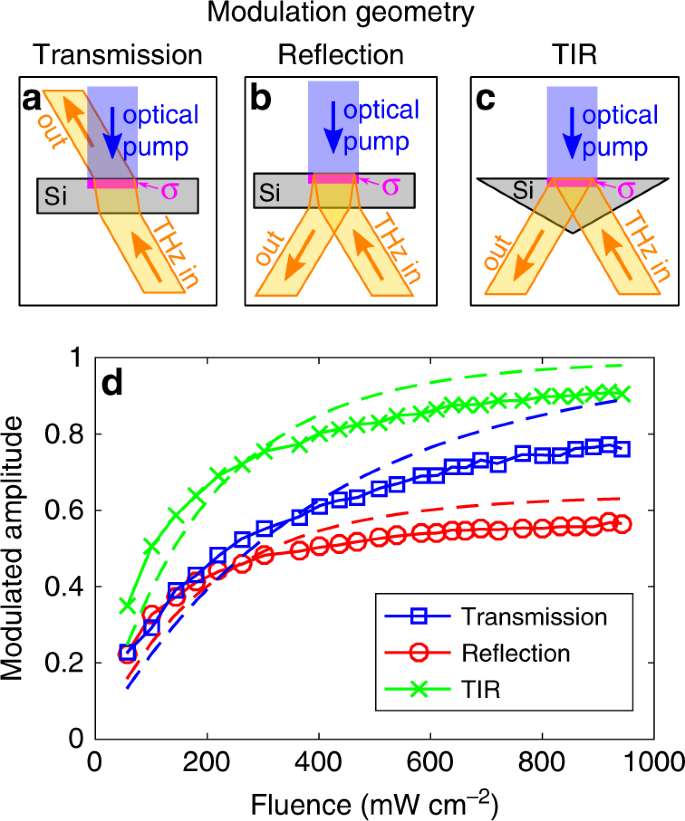
“Our latest work improves upon the acquisition rate of single-pixel terahertz cameras by a factor of 100 from the previous state-of-the-art, acquiring a 32×32 video at six frames-per-second,” said Prof Pickwell-Macpherson. “We do this by firstly determining the optimal modulation geometry, secondly by modelising the temporal response of our imaging system for improvement in signal-to-noise, and thirdly by reducing the total number of measurements with compressed sensing techniques. In fact, part of our work shows that we can reach a five times faster acquisition rate if we have sufficient signal-to-noise ratio.”

Saturday, May 23, 2020

Abstract-Real-time terahertz imaging with a single-pixel detector


Rayko Ivanov Stantchev, Xiao Yu, Thierry Blu, Emma Pickwell-MacPherson, 

figure1

https://www.nature.com/articles/s41467-020-16370-x

Terahertz (THz) radiation is poised to have an essential role in many imaging applications, from industrial inspections to medical diagnosis. However, commercialization is prevented by impractical and expensive THz instrumentation. Single-pixel cameras have emerged as alternatives to multi-pixel cameras due to reduced costs and superior durability. Here, by optimizing the modulation geometry and post-processing algorithms, we demonstrate the acquisition of a THz-video (32 × 32 pixels at 6 frames-per-second), shown in real-time, using a single-pixel fiber-coupled photoconductive THz detector. A laser diode with a digital micromirror device shining visible light onto silicon acts as the spatial THz modulator. We mathematically account for the temporal response of the system, reduce noise with a lock-in free carrier-wave modulation and realize quick, noise-robust image undersampling. Since our modifications do not impose intricate manufacturing, require long post-processing, nor sacrifice the time-resolving capabilities of THz-spectrometers, their greatest asset, this work has the potential to serve as a foundation for all future single-pixel THz imaging systems.

Thursday, May 16, 2019

Abstract-Terahertz image reconstruction based on compressed sensing and inverse Fresnel diffraction


Yingjie Shang, Xinke Wang, Wenfeng Sun, Peng Han, Jiasheng Ye, Shengfei Feng, and Yan Zhang

Fig. 1 (a) Schematic illustration of single-pixel THz imaging based on photoinduced dynamic masks. (b) Procedure of the proposed image reconstruction scheme. (c)-(h) give the simulation results, including (c) sample, (d) original THz temporal image, (e) THz diffraction image at temporal peak position, (f) THz temporal image recovered by CS, (g) THz spectral image at 0.3 THz, (h) THz image reconstructed by the IFD algorithm.


https://www.osapublishing.org/oe/abstract.cfm?uri=oe-27-10-14725

The introduction of compressed sensing (CS) effectively pushes the development of single-pixel THz imaging due to reducing the experimental time and avoiding raster scanning. In this work, a CS method based on photoinduced dynamic masks is employed to recover a THz diffraction field in the time domain, and an inverse Fresnel diffraction (IFD) integral is adopted to remove the influence of the diffraction and reconstruct the sharp THz spectral image in a single-pixel THz imaging system. The compatibility of the CS and IFD algorithms are validated on the simulation and experiment. Besides, the reconstruction effects are also systematically analyzed by reducing the measurement number and varying the diffraction distance, respectively. This work supplies a novel thinking for improving the practicability of single-pixel THz imaging.
© 2019 Optical Society of America under the terms of the OSA Open Access Publishing Agreement

Thursday, April 11, 2019

A revolutionary imaging technique uses a single pixel to fill our terahertz blind spot

ORIGINAL IMAGE: RECONSTRUCTION METHODS IN THZ SINGLE-PIXEL IMAGING; EDITED BY MIT TECHNOLOGY REVIEW
https://www.technologyreview.com/s/613278/a-revolutionary-imaging-technique-uses-a-single-pixel-to-fill-our-terahertz-blind-spot/

Terahertz waves provide a unique view of the world but have always been hard to detect. That looks set to change.

At almost every wavelength engineers have electromagnetic
antennae that can detect and record the waves and create exotic images of the world at radio, microwave, infrared, visible, and x-ray frequencies.

But there is a blind spot in this spectrum. The technology is still in its infancy to detect radiation with a wavelength of between 1 and 0.3 millimeters and a frequency of about a terahertz. The equipment that can detect such radiation is bulky and expensive and the resulting images poor. Hence the “blind spot,” which engineers have called the terahertz gap.
A better way to capture these wavelengths is desperately needed, not least to gain a new window into the universe.
Today Martin Burger at the University of Munster in Germany and a few colleagues describe a revolutionary new imaging technique—compressed sensing—that is set to make this part of the electromagnetic spectrum more accessible. Applying the technique to terahertz waves is likely to change the way we see our world and the universe beyond.
First, some background. Terahertz waves pass through clothes but not through skin or metal. If your eyes could pick them up, people would appear naked but decorated with keys and coins but perhaps also knives and guns. So this kind of imaging has significant security applications, not to mention privacy implications.
Terahertz frequencies are difficult to detect because they sit on the electromagnetic spectrum between microwaves and infrared light, and there is an important difference between the way these types of radiation can be detected.
Microwaves, like radio waves, are made by accelerating a charge back and forth at the required frequency—in this case, up to about 300 gigahertz.  Detecting microwaves exploits the same process in reverse.
By contrast, infrared waves, like light, are made by making an electron in a suitable material jump between two electronic levels. This generates infrared light when the energy required to make the jump is equivalent to the energy of an infrared photon. The same process in reverse can also detect infrared photons.
Making and detecting terahertz waves is hard because they sit in the middle where neither technique works particularly well. It's tough to accelerate charges at terahertz frequencies. And materials with the required bandgap to create terahertz photons are difficult to find, and those that qualify often have to be cooled to cryogenic temperatures. That’s why terahertz detectors tend to be bulky, expensive, and hard to manage.
But compressed sensing can help, say Burger and co. In recent years, this technique has taken the world of imaging by storm because it allows a single pixel to record high-resolution images, even in 3-D.
The technique works by randomizing the reflected light from a scene and then recording it using a single pixel. The randomization can be done in various ways, but a common approach is to pass the light through a digital array called a spatial light modulator that displays a random pattern of transparent and opaque pixels. The randomization process is then repeated and the light field recorded again, and the entire process is repeated many times to generate many data points.
At first it’s hard to see how this can produce an image—after all, the light field is randomized. But the data points aren’t completely random. Indeed, each data point is correlated with all others because they all come from the same source—the original scene. So by finding this correlation, it is possible to recreate the original image.
It turns out that computer scientists have a variety of algorithms that can do this kind of number crunching. And the result is an image with a resolution that depends on the number of data points recorded by the pixel. The more data, the higher the resolution.
That has immediate application for terahertz imaging. Until now, the only way to create a 2-D image was to use an array of terahertz detectors or to scan a single detector back and forth to map out the light field. Neither technique is satisfactory because of the unwieldy size of terahertz detectors.
But compressed sensing offers an alternative: using a single terahertz detector to record multiple data points through a spatial light modulator that randomizes the terahertz light. That works well for visible and infrared light, and numerous groups have begun to exploit it successfully.
However, terahertz light introduces some additional complexities. For example, because terahertz waves are two or three orders of magnitude bigger than optical waves, they more easily diffract. This effect and others introduce distortions that make the image reconstruction much harder. It is this challenge of image reconstruction that Burger and co have taken on.
Their results are impressive. The team shows how various techniques can significantly improve the quality of resulting images. “The compressed-sensing approach based on single-pixel imaging has great potential to decrease measurement time and effort in THz imaging,” they say.
However, there are challenges ahead. One problem is in dealing with images made from more than one frequency of terahertz light. This kind of analysis is particularly important because it provides spectroscopic information about the chemical makeup of the subject in the image—for example, whether a crystalline powder is flour or some kind of drug. 
But this requires different types of mask. So a challenge is to find the best way to create a hyperspectral image using the smallest number of masks.
Nonetheless, Burger and co are optimistic that compressed sensing will allow rapid progress in finally closing the terahertz gap.
Ref: arxiv.org/abs/1903.08893 : Reconstruction Methods in THz Single-Pixel Imaging

Saturday, January 20, 2018

Abstract-Compressed sensing with cyclic-S Hadamard matrix for terahertz imaging applications


Esra Şengün Ermeydan,  I. Cankaya,

https://www.researchgate.net/publication/322467886_Compressed_sensing_with_cyclic-S_Hadamard_matrix_for_terahertz_imaging_applications

Compressed Sensing (CS) with Cyclic-S Hadamard matrix is proposed for single pixel imaging applications in this study. In single pixel imaging scheme, N = r · c samples should be taken for r×c pixel image where · denotes multiplication. CS is a popular technique claiming that the sparse signals can be reconstructed with samples under Nyquist rate. Therefore to solve the slow data acquisition problem in Terahertz (THz) single pixel imaging, CS is a good candidate. However, changing mask for each measurement is a challenging problem since there is no commercial Spatial Light Modulators (SLM) for THz band yet, therefore circular masks are suggested so that for each measurement one or two column shifting will be enough to change the mask. The CS masks are designed using cyclic-S matrices based on Hadamard transform for 9 × 7 and 15 × 17 pixel images within the framework of this study. The %50 compressed images are reconstructed using total variation based TVAL3 algorithm. Matlab simulations demonstrates that cyclic-S matrices can be used for single pixel imaging based on CS. The circular masks have the advantage to reduce the mechanical SLMs to a single sliding strip, whereas the CS helps to reduce acquisition time and energy since it allows to reconstruct the image from fewer samples.

Thursday, April 28, 2016

Abstract-Single pixel imaging with tunable terahertz parametric oscillator


Pan Duan, Yuye Wang, Degang Xu, Chao Yan, Zhen Yang, Wentao Xu, Wei Shi, and Jianquan Yao
https://www.osapublishing.org/ao/abstract.cfm?uri=ao-55-13-3670

A method of active terahertz imaging based on compressive sampling is demonstrated. A metal mask structure is designed with all modulation matrices engraved on. The imaging approach based on the mask eliminates the need for imaging object movement in point-wise scanning and shows high sensitivity. A terahertz parametric oscillator with tunability from 0.5 to 2.7 THz was used as the light source. Holes with circular, rectangular, and letter “H” shapes were imaged at 1.75 THz at 20% sampling rate. The influence of sampling rates and averaging times on the image was analyzed. Imaging of the letter “H” at different frequencies from 1.0 to 2.2 THz was tested and evaluated, and recognizable results were obtained in the range of 1.4–2.0 THz.
© 2016 Optical Society of America
Full Article  |  PDF Article

Sunday, March 20, 2016

Abstract-Full-Color Stereoscopic Imaging With a Single-Pixel Photodetector


Eva Salvador-Balaguer, Pere Clemente, Enrique Tajahuerce, Filiberto Pla, and Jesús Lancis

https://www.osapublishing.org/jdt/abstract.cfm?uri=jdt-12-4-417

We present an optical system for stereoscopic color imaging by using a single-pixel detector. The system works by illuminating the input scene with a sequence of microstructured light patterns generated by a color digital light projector (DLP). A single monochromatic photodiode, synchronized with the DLP, measures the light scattered by the object for each pattern. The image is recovered computationally by applying compressive sensing techniques. The RGB chromatic components of the image are discriminated by exploiting the time-multiplexed color codification of the DLP. The stereoscopic pair is obtained by splitting the light field generated by the DLP and projecting microstructured light patterns onto the sample from two different directions. The experimental setup is configured by simple optical components, a commercial photodiode and an off-the-shelf DLP projector. Color stereoscopic images of a 3-D scene obtained with this system are shown.
© 2015 IEEE
PDF Article

Sunday, June 29, 2014

Single-pixel 'multiplex' captures elusive terahertz images


Single-pixel 'multiplex' captures elusive terahertz images
Developed by a team of researchers from Boston College, the University of New Mexico and Duke University, a "multiplex" single pixel imaging process effectively tames stubborn terahertz (THz) light waves with electronic controls in a novel metamaterial. As the graphic shows, THz image waves are received by a metamaterial spatial light modulator, which in turn sends multiple data points from the THz scene to a single-pixel detector, which computationally reconstructs the image faster, more efficiently and with higher-fidelity than conventional THz imaging technology. Credit: Nature Photonics, 2014.

Read more at: http://phys.org/news/2014-06-single-pixel-multiplex-captures-elusive-terahertz.html#jCp
A novel metamaterial enables a fast, efficient and high-fidelity terahertz radiation imaging system capable of manipulating the stubborn electromagnetic waves, advancing a technology with potential applications in medical and security imaging, a team led by Boston College researchers reports in the online edition of the journal Nature Photonics.
The team reports it developed a "multiplex" tunable spatial light modulator (SLM) that uses a series of filter-like "masks" to retrieve multiple samples of a terahertz (THz) scene, which are reassembled by a single-pixel detector, said Boston College Professor of Physics Willie Padilla, a lead author of the report.
Data obtained from these encoded measurements are used to computationally reconstruct the images as much as six times faster than traditional raster scan THz devices, the team reports. In addition, the device employs an efficient low power source, said Padilla, whose research team worked with colleagues from the University of New Mexico and Duke University.
"I think we were surprised by how well the imaging system worked, particularly in light of the incredibly low power source," said Padilla. "Traditional THz imaging systems use sources that demand much more power than our system."
Metamaterials are designer electromagnetic materials that have tunable optical properties, allowing them to interact with light waves in new ways. Those unique properties have proven conducive to working with THz light waves, which have longer wavelengths than visible light and therefore require new imaging technology.
Padilla said the team set out to use metamaterials to develop an imaging architecture superior to earlier THz camera designs, which have relied on expensive and bulky detector arrays to assemble images.
Central to the team's advanced device is the development of a spatial light modulator constructed from a unique metamaterial structure by researchers at the University of New Mexico's Center for High Technology Materials. The SLM, which deploys a series of masks to obtain select image information from the THz scene, showed it effectively tames the otherwise stubborn THz light waves, which have defied other forms of frequency controls such as electronic sensors and semiconductor devices.

The metamaterial SLM efficiently modulates THz radiation when an electronically controlled voltage is applied between two layers of the metamaterial, effectively changing its optical properties and allowing it to actively display encoding masks designed to retrieve THz images. One such encoding technique allowed the researchers to access negative encoding values, which allow for higher fidelity image reconstruction.
A negative encoding value typically requires phase-sensitive sources and detectors, multiple detectors, or taking twice the number of measurements in order to create the image. The team created its "masks" without additional equipment or measurements, allowing researchers to use a more robust image encoding method that increased image quality while reducing the time needed to acquire the image.
Since it offers improved results without additional equipment, researchers engaged in "multiplexing" THz imaging could quickly adopt the new imaging approach. The findings add to a growing body of research that shows  are a viable option for the construction of efficient SLMs at THz wavelengths.
"In the long run, I think we set out a new paradigm for imaging at longer wavelengths," said Padilla. "Rather than including an expensive and bulky detector array in an imaging system, high-fidelity images can be obtained with only a single pixel detector and a low power source, allowing for a compact and inexpensive THz imaging system."
Padilla said a new generation of metamaterial THz imaging systems could help realize the potential applications projected by researchers and theorists.
"This type of  has the potential to make a huge impact," said Padilla. "The ability to image a scene with THz could be used to screen for cancerous skin cells, monitor airports and other secure areas for illegal drugs or explosives, and perform personnel screening to look for concealed weapons."

Wednesday, February 26, 2014

Seminar-Long Wavelength Single Pixel Imaging with Metamaterial Spatial Light Modulators


ECE Seminar or Event

Long Wavelength Single Pixel Imaging with Metamaterial Spatial Light Modulators

Willie Padilla

Associate Professor Department of Physics
Boston College
 
Tuesday, March 11, 2014
10:00am - 11:00am
1008 EECS
 

About the Event

"Metamaterials are a design paradigm for the construction of novel composites, where exotic electromagnetic properties arise from geometry rather than chemistry. From negative refractive index to cloaking and perfect lenses to perfect absorbers, metamaterials have demonstrated an extraordinary ability to extend the electromagnetic response of materials. As the underlying physics of these fascinating materials continues to be uncovered, much effort is now shifting toward demonstration of novel applications. I will present the design, fabrication, and demonstration of active metamaterials that function as a real-time tunable, spectrally sensitive spatial masks for use in THz imaging with only a single pixel detector."

Biography

I received both my MS and PhD degrees in Physics from UC San Diego, and my thesis work, completed in 2004, was for investigation of the THz, infrared, optical and magneto-optic properties of novel materials utilizing various spectroscopic methods, including Fourier transform spectroscopy and ellipsometry. Materials studied include high temperature superconductors, pyrochlores, and artificial metamaterials. I was an author on the “discovery” paper on “left-handed” or Negative Index (NI) materials, and a main contributor to demonstrating artificial magnetic response at THz frequencies. I was awarded a Director’s Postdoctoral Fellowship from Los Alamos National Laboratory and worked in the laboratory for ultrafast optics in MST-CINT. My postdoctoral work at Los Alamos focused on terahertz time domain spectroscopy of novel materials. I am an Associate Professor of Physics at Boston College - now in my sixth year. In 2007 I was awarded a Young Investigator Program from the Office of Naval Research – a young faculty award – and a Presidential Early Career Award for Scientists and Engineers (PECASE) in 2011. In 2013 I was elected a Kavli Frontiers of Science Fellow. My research interests are primarily directed towards simulating, fabricating and measuring metamaterials at microwave, THz, and infrared frequencies and the characterization of high temperature superconductors. I am an expert in infrared, terahertz time domain, microwave, and magneto-optical spectroscopy.

Additional Information

Contact: Linda Scovel
Phone: 763-3260
Email: lscovel@umich.edu
Sponsor: ECE
Open to: Public