Showing posts with label SBIR. Show all posts

Saturday, April 14, 2018

OT-LUNA Blog-Embedded Sensors Can Detect Damage in Composites


http://lunainc.com/embedded-sensors-detect-damage-composites/

Combining very high strength with light weight, composite materials are finding their way into more and more structural and cosmetic parts within the aerospace and automotive industries. As composite use grows throughout these industries, efficient and effective methods of non-visual damage detection are needed. To meet this need, Luna has demonstrated that high spatial resolution (0.65 mm) fiber optic strain sensors incorporated into carbon fiber composite test articles can effectively detect damage from an impact by measuring a change in the strain profile, even when the impact causes fiber fracture and delaminations below the visible surface.
To test this method, a mock aircraft skin panel was fabricated to assess the distance over which the damage imparted to the panel propagates. The panel was fabricated from eight plies of 193 g/m2 3K plain weave fabric with a 19 mm foam core on the mid-plane. Optical fibers were embedded just below the outermost ply in three parallel passes spaced 1 cm apart.

Skin impact panel geometry and layup.

The panel was then impacted to determine the relationship between fiber to impact distance and the strength of the induced fiber signal. A drop style impactor, similar to that which is used in ASTM D7136, was utilized to impart a quantifiable and controlled series of impacts. Strain measurements were achieved using Luna’s ODiSI system for high-definition fiber optic sensing (HD-FOS).
The following figure diagrams the location of 16 impacts. The initial eight impact events were conducted with the same impact parameters. The next six impacts (9-14) were spaced at larger horizontal spacing, and with less energy, to avoid conflating the results of the various impacts. Two final impacts were made at locations 15 and 16 between the bottom two fiber sections, to determine whether especially close proximity between the impact and the fiber altered the response.

Skin impact panel impact sequence. The three fibers are shown by the colored lines. All distances are in mm.

The following figure displays strain as a color map on a drawing of the panel after the 4th and 16th impact. Impact site 4 shows successively decreasing levels of strain propagating outwards from the impact location. The yellow circle traces the region of damage based on the reported strain. Note that the center of the circle is almost exactly over the impact location. The lower portion of the figure shows the cumulative damage resulting from all impacts performed on the impact panel. It is obvious that all impact events within ~5 cm of the fibers have resulted in a clearly discernible response in the strain profiles.

Strain displayed as a color map on a drawing of the panel after the 4th and 16th impact.
Photograph of impact series on skin impact panel. All four impact events were performed with identical test conditions.

This research was partially funded by NASA through a Phase I SBIR. A paper on this work was published at the Composites and Advanced Materials Expo 2017, December 11-14, 2017. The full reference for the paper is:
Kominsky, Daniel., Rahim, Nur Aida Abdul., Davis, Matthew,. Garg, Naman., Castellucci, Matthew., Bryson, Reginald., Beaty, Noah., “Extracting Information from Damaged Carbon Fiber Composites Using High Definition Fiber Optic Sensing (HD-FOS).” Composites and Advanced Materials Expo 2017, December 11-14, 2017
For more information on other ways that the Luna ODiSI measurement system is helping to accelerate the adoption of composite materials, see this short application brief on High Definition Strain Sensing for Composites with HD-FOS.

Sunday, October 15, 2017

SBIR-STTR- Phase I: A UAV Mounted Frequency Domain Terahertz Spectrometer for Real-Time, Location Specific, Pollution Detection


Bakman Technologies LLC
Joseph Demers

The broader impact/commercial potential of this Small Business Innovation Research (SBIR) Phase I project is to create an economical, high performance Terahertz (THz) spectrometer mounted to a consumer drone or Unmanned Aerial Vehicle (UAV) to allow testing of air for the presence of harmful compounds over a specific geographical location. A frequency domain THz spectrometer is capable of characterizing many different molecules and chemicals in a gas sample. Historically these spectrometers have been relegated to the laboratory because of their size and complexity. However, recent advancements have made it possible to build a lightweight spectrometer that can be mounted to a drone. This is significant because the ability to analyze samples locally removes the time and expense of collecting and shipping potentially dangerous compounds (i.e. chemical warfare agents or pollutants) to a laboratory for analysis. It also allows detection and classification to occur on short notice and without the need to subject personnel to the local environment. The THz Drone will allow immediate and accurate detection of many harmful compounds in the air. The proposed project will demonstrate a compact, battery operated, frequency domain THz photomixing spectrometer that is capable of Doppler limited molecular spectroscopy and is constructed predominantly from economical off-the-shelf fiber optic components in a highly compact, light-weight form factor. The brass-board instrument will incorporate an optical phase-modulation technique to remove the effects of coherent detection and it will have a greater than 2 THz bandwidth with a spectral purity of better than 100 kHz. After construction, the instrument will be employed to measure Doppler limited molecular transitions of carbon dioxide mixed with water vapor. Upon the successful demonstration of the capabilities of the instrument, a first-draft design for an integrated system weighing less than 3 kg and capable of being carried with a consumer drone will be generated as will a larger laboratory version of the instrument.

Sunday, July 16, 2017

SBIR-STTR- RadiaBeam Systems-DOE-Radiation spectrometer for RF breakdown detection in THz linear accelerators


RadiaBeam Systems
1713 Stewart Street, Array, Santa Monica, CA, 90404
 Sergey Kutsaev
 Dr.
 (310) 822-5845
 kutsaev@radiabeam.com
https://www.sbir.gov/sbirsearch/detail/1212795

The future of high energy particle physics and Xray light sources for biological and material research require miniaturized linear accelerators that at present cannot be qualified using existing methods. Such miniaturized linear accelerates will be instrumental in managing the cost of future accelerator facilities. There is presently no suitable diagnostic for ensuring RF breakdowns are minimized during the commissioning stage of these miniaturized linacs. In response to this shortcoming, RadiaBeam proposes to develop and build an automated singleshot grating based spectrometer working in the terahertz regime of these new miniaturized linacs. Such a device will be capable of measuring the presence of an RF breakdown event and will be used as a feedback mechanism in the commissioning of these linacs. Such grating spectrometers exist in the visible and infrared regimes but recent advances in materials science and detector technology make this scheme extendable to the regime of interest on a cost effective basis. A proof of principle spectrometer was developed and tested with bench top sources. After calibration and bench testing, the spectrometer was used in the successful qualification of a terahertz linac at Facility for Advanced Accelerator Experimental Tests (FACET) beamline at SLAC. The shortcomings of the proof of concept device and potential additions were identified. Building on the success of the prooforprinciple demonstration, RadiaBeam will design and deploy a narrow band and wideband spectrometer for general THz instrumentation and terahertz linac qualification. The resulting spectrometers will be full commercial devices and will be tested at the THz test stand at the advanced Photon Source, and as an advanced RFBD diagnostic at MIT during the commissioning of a next generation terahertz linac. The proposed spectrometer will allow advancement of miniaturized terahertz linacs, allowing miniaturization of many future DOE accelerator facilities. In addition, the one of a kind single shot spectrometer developed here can be used in a wealth of complimentary fields, including terahertz instrumentation, bunch length diagnostics, drug discovery, and homeland security. Key Words THz, terahertz, mmwave, spectrometer, singleshot, Wband, linac. RadiaBeam Systems seeks to build a commercial quality THz spectrometer necessary to qualify the next generation of miniaturized particle accelerators. The spectrometer has additional applications in biology, drug discovery, security, and general instrumentation while serving the DOE mission of basic science.

Saturday, July 15, 2017

SBIR-STTR-Far-Tech-DOE Robust S-Band thermionic RF gun with improved back-bombardment suppression


FAR-TECH, Inc.
10350 Science Center Drive, Ste 150, San Diego, CA, 92121-1136

 David Newsham
 Dr.
 (858) 455-6655
 newsham@far-tech.com

https://www.sbir.gov/sbirsearch/detail/1209409

Thermionic electron sources operating a microwave frequencies with longer lifetimes and increased performance will improve the reliability of synchrotron light sources and a new generation of high power terahertz light sources. Increasing the reliability of the electrons sources will improve the stability of operation for users. The robust thermionic electron source uses a short initial cell, followed by a cavity that is electrically uncoupled from the initial cell. The initial short gap delays the launch phase at which back-bombardment of the electrons onto the cathode will occur. This effectively decreases the beam power that will heat the cathode and increased the possible pulse width. The second cavity is uncoupled to the first cavity and is driven independently to maximize beam capture. In Phase I, the feasibility of producing the novel gun design will be determined through RF and beam dynamics simulation. The effectiveness of the short first cell followed by an independently driven cavity will be verified. The ability to cancel the coupling between the two cells will be confirmed and a design of the whole cavity structure will be developed. The cathode mounting system will be designed. Thermionic electron sources operating at microwave frequencies are current limited by electrons that reflect back from the radio frequency fields and heat the cathode. A novel cavity design is being investigated that will decrease the number of reflected electrons and improve the efficiency of the overall electron source. Commercial Applications and Other Benefits: This cavity will be an improvement over existing thermionic guns, allowing for operation at increased duty factor do to the reduction of the electron back-bombardment on the cathode. It has potential uses in synchrotron light sources and high power terahertz sources.

Monday, July 10, 2017

National Science Foundation Awards Grant for Drone Monitoring of Global Warming


http://dronelife.com/2017/07/10/national-science-foundation-awards-grant-for-drone-monitoring-of-global-warming/


By:Frank Schroth


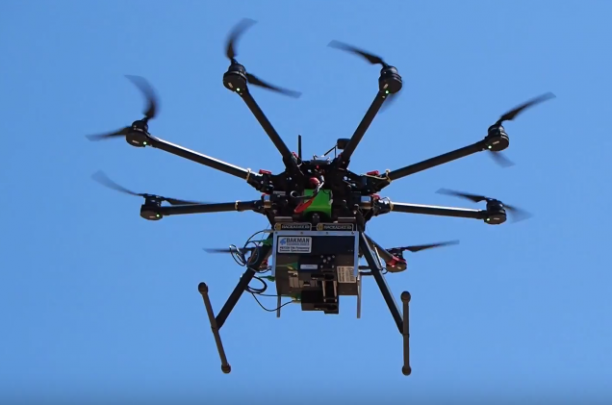
Small Business Innovation Research (SBIR) of the National Science Foundation recently awarded Bakman Technologies Inc. a grant to develop a low-cost, high-performance, UAV mounted Terahertz (THz) spectrometer. These ‘THz Drones’ will be employed to perform spot measurements of the concentrations of a broad range of gases that contribute to pollution and global warming. They can make measurements right at the point of emission allowing location-specific, real-time, detection.
“We are extremely grateful to the NSF for recognizing the importance and potential our Terahertz technology has for combating the global problem of air pollution,” states Dr. Joseph R. Demers, the CEO of Bakman Technologies. “Because of the atmospheric science that has already occurred, our ‘THz Drones’ will be able to make an impact in a very short amount of time.”
“The National Science Foundation supports small businesses with the most innovative, cutting-edge ideas that have the potential to become great commercial successes and make huge societal impacts,” said Barry Johnson, Director of the NSF’s Division of Industrial Innovation and Partnerships. “We hope that this seed funding will spark solutions to some of the most important challenges of our time across all areas of science and technology.”
The Phase I SBIR/STTR grant award enables Bakman to become eligible to apply for a Phase II grant (up to $750,000). If obtained, Bakman could then obtain up to $500,000 in additional matching funds with qualifying third-party investment or sales.
NSF accepts Phase I proposals from small businesses twice annually in June and December. Small businesses with innovative science and technology solutions, and commercial potential are encouraged to apply. All proposals submitted to the NSF SBIR/STTR program undergo a rigorous merit-based review process.
Here is a video courtesy of Bakman Technologies:

Sunday, July 9, 2017

SBIR Award Phase I to Picometrix-NASA Differential Terahertz Imaging Methods for Enhanced Detection of Subsurface Features, Flaws, and Damage


 David Zimdars
 Mgr. of THz Development
 (734) 864-5639
 dzimdars@picometrix.com


https://www.sbir.gov/sbirsearch/detail/1217323

Picometrix proposes to demonstrate the feasibility of using differential time domain terahertz imaging methods to enhance the contrast and detectability of features such as kissing disbonds and cracks that in conventional THz imaging only weakly reflect or scatter the THz pulses. The goal of the project is to develop methods of shearographic loading of the samples, and use the penetrating THz pulses to detect the subsurface deformation of the defects in the differential THz images with better contrast than traditional THz imaging. In a "kissing" disbond there is a region where the two sides of the material are not adhered, but the space between the two sides are essentially in perfect optical contact. When the space between the two interfaces is so optically "thin," the reflections of the THz pulses from the top and bottom surfaces cancel each other out. The defect signature is only weakly detectable compared to when the spacing is greater than the minimum THz wavelength (approx. 50-150 microns), the shearographic loading will microscopically deform defects, changing the small THz reflections in the loaded vs. unloaded state. The differential images should subtract all background clutter and highlight the microscopic subsurface distortion of the defects under loading.

Wednesday, May 31, 2017

OT- LUNA BLOG -Luna’s Corrosion and Coating Evaluation System is an Air Force SBIR Success Story


May 18, 2017
(My Note: This provides some "color" to the earlier link on this blog, on this topic. https://terahertztechnology.blogspot.com/2017/05/ot-sbir-sttr-success-luna-innovations_16.html)

Corrosion prevention and control represents a significant driver of costs for the United States Armed Forces.  For the Air Force alone, multi-billion dollar annual expenditures are needed to combat corrosion of aircraft.  The most effective means of corrosion control is through protective coatings.  In partnership with the Air Force though the Small Business Innovation Research (SBIR) program Luna has developed a new technology that improves upon laboratory evaluation of aerospace coatings.  The Corrosion and Coatings Evaluation System (CorRES) offers a better way to measure the ability of coatings to protect aircraft structures from corrosion, which can lead to accelerated development and adoption of high performance coatings (Figure 1).  CorRES was recently featured by the Air Force as a SBIR Transition Success Story (https://www.sbir.gov/node/1246401).

CorRES_test_rack
Figure 1. The Corrosion and Coating Evaluation System (CorRES) test rack and docking platform assembly with multi-sensor panel array, standard test panels, and mass loss coupons.


Conventional Coating Tests Are Lacking
Existing test methods are subjective measures of coating performance.  They rely on relatively simple visual inspections of coated test panels.  There is no quantifiable result of the robustness of the coatings and corrosion inhibitors during accelerated tests.  Consequently, the ability of developers or users to compare the relative performance of various coatings and select the most effective system for a given application is decreased.
The Future of Coating Testing
Our CorRES measures the ability of coatings to protect aircraft structures quantitatively.  It can be applied in any environment currently utilized for coating evaluation testing including at outdoor exposure sites or within accelerated test chambers.  Sensor panels, which are prepared, painted, and tested like traditional panels, are used to measure the ability of a coating to protect a substrate from the environment as well as inhibit corrosion at a defect (Figure 2).  Measurements include the barrier properties of the intact coating and the corrosion rate of the engineering alloy or dissimilar metal couple of interest at a defect.

Multi-sensor_panel.png
Figure 2. Multi-sensor panel with interdigitated electrode (IDE) sensors to quantify coating barrier properties (Gold [Au] IDE), free corrosion rate of an engineering alloy (Aluminum [Al] IDE fabricated from AA7075-T6) and galvanic corrosion (Aluminum/Stainless Steel [Al/SS] IDE fabricated from AA7075-T6 and 316 stainless steel).


Corrosion and Coating Sensors Are Available Now for Purchase Online
The CorRES system and accessories, in addition to our corrosion monitoring system, are available for purchase online at https://devstore.lunainc.com/ .

This material is based upon work supported by the U.S. Air Force Research Laboratory under Contract No. FA8501-13-C-0026.  The content of the information does not necessarily reflect the position of the policy of the Government, and no official endorsement should be inferred.

Monday, July 11, 2016

OT- USAF awards Luna Innovations $748,656.00 SBIR Phase II contract-Quantitative Gun Barrel Diagnostics with Eddy Current Techniques and Artificial Intelligence


https://www.sbir.gov/sbirsearch/detail/1159773

Amount:
$748,656.00
Award Year:
2016


ABSTRACT: The useful life of medium caliber gun barrels is dominated by fatigue cracking initiated early in the weapons deployment. Fatigue cracks worsen in severity throughout the life of the barrel until they reach a critical size, indicating end of life. During the Phase I effort, Luna demonstrated that eddy current (EC) techniques are effective in detecting both machined and fatigue-induced cracks inside gun barrels. EC-based measurements performed on several medium caliber barrels were not influenced by the intricate rifling profile of the bore of the barrel while remaining sensitive to cracks ranging from under 0.02 inches to greater than 0.375 inches. In the Phase II effort, Luna proposes development of an EC-based prototype with artificial intelligence post-processing algorithms for complete autonomy in assessing fatigue condition within barrels. A man-portable prototype for use on flight lines will be assembled, allowing for barrel evaluation without requiring their removal from the aircraft. Based on a multi-frequency excitation scheme, an improved design of the probes, and a trained neural classifier, the prototype will identify the number of existing cracks around the barrel circumference and assess their individual depths and locations.; BENEFIT: This project directly addresses the need for increasing savings and reducing maintenance cost of medium caliber gun barrels. Maintenance time and costs will be reduced by increasing barrel usage and reducing barrel replacement frequency. Currently, medium caliber gun barrels are retired when a maximum number of rounds is reached, often leading to premature removals. The developed system will allow for continued barrel usage throughout its entire useful life. The overall anticipated result of this effort is development of a new tool for assessing the condition of medium caliber gun inventory, replacing todays statistically-based gun retirement protocol with a condition-based inventory management protocol. The proposed technology has broad market potential and meets a significant economic and national security need. Anticipated commercial uses include pipe inspection in the electric power, marine propulsion, and petrochemical industries.

Wednesday, June 15, 2016

OT- Luna Innovations awarded multiple SBIR contracts with NASA and Other US Government Agencies


My Note:
I had heard a rumor that Luna received $500,000 in SBIR contract funds from NASA. I can't confim that this number is accurate, but I did find Luna did receive 6 SBIR contracts from various US Government agencies in 2016. You can see the list here:
http://sbir.nasa.gov/content/luna-innovations-inc

(I did find another link which states the amount of each award is not yet publicly available.)

The following is the first award on the list.

PROPOSAL NUMBER:
16-1 T6.01-9730
RESEARCH SUBTOPIC TITLE:
Space Suit Environmental Protection Garment Materials and Technologies
PROPOSAL TITLE:
Environmentally Protective Fabrics for Spacesuits

SMALL BUSINESS CONCERN (SBC):
RESEARCH INSTITUTION (RI):
NAME:
Luna Innovations, Inc.
NAME:
North Carolina State University
STREET:
301 1st Street Southwest, Suite 200
STREET:
NCSU Office of Sponsored Programs
CITY:
Roanoke
CITY:
Raleigh
STATE/ZIP:
VA  24016 - 1921
STATE/ZIP:
NC  27695 - 7514
PHONE:
(540) 769-8400
PHONE:
(919) 515-2444
PRINCIPAL INVESTIGATOR/PROJECT MANAGER (Name, E-mail, Mail Address, City/State/Zip, Phone)
Dr. Bryan Koene
koeneb@lunainc.com
3157 State Street
Blacksburg, VA 24060 - 6604
(540) 558-1699
CORPORATE/BUSINESS OFFICIAL (Name, E-mail, Mail Address, City/State/Zip, Phone)
Ms. Shirley Evans
submissions302@lunainc.com
301 1st Street SW Suite 200
Roanoke, VA 24016
- 1921
(540) 961-6724
Estimated Technology Readiness Level (TRL) at beginning and end of contract: 
Begin: 4 
End: 6
Technology Available (TAV) Subtopics 
Space Suit Environmental Protection Garment Materials and Technologies is a Technology Available (TAV) subtopic that includes NASA Intellectual Property (IP). Do you plan to use the NASA IP under the award?
No
TECHNICAL ABSTRACT (Limit 2000 characters, approximately 200 words) 
Luna is addressing NASA's need to develop new multifunctional textiles for improved Environmental Protection Garments (EPG). Previous protective suits such as the Apollo era EPG or currently used Extravehicular Mobility Unit (EMU) provide thermal and micrometeoroid protection, but are intended only for short duration use. NASA plans for a future manned Mars mission will potentially require extended protection for up to 500 days. Critical capabilities for these textiles include improved i) dust mitigation to protect from potentially corrosive or abrasive particles in the Martian regolith, ii) cut and puncture resistance to protect the suit bladder from damage from sharp edges of tools and rocks, and iii) durability for extended use. Luna will develop a multifunctional textile composite that will achieve these stringent goals, while maintaining comfort and mobility. Our team will combine several well developed technologies into a practical textile design, which will provide excellent protection from dust, fire, chemical exposure, and cut/puncture. These will be integrated to minimize weight and maximize flexibility such as to not prohibit, degrade, or interfere with the use of equipment.
POTENTIAL NASA COMMERCIAL APPLICATIONS (Limit 1500 characters, approximately 150 words) 
This development is focused on new environmentally protective spacesuits specifically for Mars missions. Whereas the textiles based technologies will be optimized for this environment, the general development will make these amenable for use on the Extravehicular Mobility Unit (EMU) with the International Space Station.
POTENTIAL NON-NASA COMMERCIAL APPLICATIONS (Limit 1500 characters, approximately 150 words) 
Luna will produce a practical protective textile composite designed specifically for NASA missions. The individual and composite technologies developed will have a wider use for commercial protective fabrics. It is anticipated that these textiles could be used to provide protection to general use for environmental cleanup garments, first responder's uniforms, as well as general use and chemical protective military uniforms.
TECHNOLOGY TAXONOMY MAPPING (NASA's technology taxonomy has been developed by the SBIR-STTR program to disseminate awareness of proposed and awarded R/R&D in the agency. It is a listing of over 100 technologies, sorted into broad categories, of interest to NASA.)
Protective Clothing/Space Suits/Breathing Apparatus
Textiles


Sunday, December 20, 2015

NHI-Imaging Diagnostics of Dental Diseases and Conditions (Caries, Periodontal Disease, Cracked Teeth, and Pulp Vitality) SBIR R43/R44 (PA 12 195)


MY NOTE: This link was  reposted in the last five hours, so I don't know if the deadline for applicants has been expanded or not.
I posted it because, I had not seen it before. 

http://www.usgrants.org/opportunity/imaging-diagnostics-of-dental-diseases-and-conditions-caries-periodontal-disease-cracked-teeth-and-pulp-vitality-sbir-r43r44/4350

The National Institutes of Health in the health sector is offering a public funding opportunity titled "Imaging Diagnostics of Dental Diseases and Conditions (Caries, Periodontal Disease, Cracked Teeth, and Pulp Vitality) SBIR R43/R44" and is now available to receive applicants.
Interested and eligible applicants and submit their applications by referencing the CFDA number(s): 93.121 Oral Diseases and Disorders Research.
This funding opportunity was created on Jun 4, 2012 and posted on Jun 4, 2012.
Applicants must submit their applications by Apr 5, 2015.
Eligible applicants include: Small businesses.
Full Funding Opportunity Description:
The intent of this SBIR initiative is to accelerate the advanced development and clinical implementation of reliable, reproducible, highly specific and sensitive imaging diagnostic devices for dental caries, periodontal disease, cracked teeth, and pulp vitality.
These new devices must demonstrate superior specificity and sensitivity compared with current diagnostic methods, such as the visual/tactile/radiographic examination for detection of caries, while not increasing health risks for patients.
Approaches that could be explored include, but are not limited to optical coherence tomography (OCT) with or without Raman spectroscopy, MRI image analysis, electrical conductivity measurement (ECM), quantitative laser fluorescence (QLF), alternating current impedance spectroscopy, multi photon imaging, infrared thermography, infrared fluorescence (IR), ultrasound, and terahertz imaging.
The development of novel modalities is also encouraged.

Monday, June 1, 2015

SBIR Award Agiltron Corporation-Uncooled Photomechanical Terahertz Imagers


15 Cabot Road, Woburn, MA, 01801
Principal Investigator:
MatthewErdtmann
Senior Scientist
(781) 935-1200
merdtmann@agiltron.com
Business Contact:
SarahWeidlein
Administrative Assistant
(781) 935-1200
sweidlein@agiltron.com
Research Institute:
University of Massachusetts Lowell
Linda Concino
 
Office of Research Admin (ORA)
600 Suffolk St., 2nd Floor S
Lowell
, MA
, 1854
 
(978) 934-4723
 
https://www.sbir.gov/sbirsearch/detail/1407

Agiltron and the University of Massachusetts Lowell will develop a transformational terahertz (THz) imager based on Agiltron's established optical readout photomechanical imaging technology. The photomechanical imager contains a MEMS-based focal plane array that transduces THz radiation into a visible signal for capture by a high-performance CCD imager. By leveraging the advances made in the fields of MEMS processing and silicon-based imagers, the photomechanical THz imager will meet the Air Force performance objective of NEP < 10-12 W/Hz1/2 from 1-10 THz and frame rate > 30 fps, all while featuring uncooled operation and a dramatic reduction in size, weight, and power (SWAP) and cost over commercially available THz imagers. In Phase I, through extensive materials investigation, imager testing, and performance modeling, we will extend the photomechanical imaging platform to cover the THz range and meet the Air Force performance objectives. BENEFIT: The proposed uncooled photomechanical THz imager development program represents a major technology breakthrough, facilitating wide use of these highly capable imagers in military applications. Because THz radiation can penetrate through most materials, applications for THz imagers include detection of concealed weapons, land mines and improvised explosive devices, chemical agents, and void and crack formation on aircraft skins. Also, because THz radiation readily transmits through smoke and fog, THz imagers are also useful for target acquisition and identification, terrain avoidance for aircraft, and brownout circumvention for helicopters and other rotorcraft. Targeted DoD end user agencies include the Air Force, Army, Navy, and Marines.