Showing posts with label ITMO University. Show all posts

Tuesday, June 16, 2020

Scientists propose data encoding method for the 6G standard


https://phys.org/news/2020-06-scientists-encoding-method-6g-standard.html

Researchers around the world are working on methods to transfer data in the terahertz (THz) range, which would make it possible to send and receive information more quickly than today's technology. But it is much more difficult to encode data in the THz range than in the GHz range currently used by 5G technology. A group of scientists from ITMO University has demonstrated the possibility of modifying terahertz pulses in order to use them for data transmission. They have published their results in Scientific Reports.

Telecommunications companies in  are beginning to adopt the new 5G standard, which will provide previously impossible wireless data transfer speeds. Meanwhile, as companies roll out this new generation of data networks, scientists are already at work on its successor. "We're talking about 6G technologies," says Egor Oparin, a staff member of ITMO University's Laboratory of Femtosecond Optics and Femtotechnologies. "They will increase data transfer speeds by anywhere from 100 to 1,000 times, but implementing them will require us to switch to the terahertz range."
Today, a technology for simultaneous transfer of multiple data channels over a single physical channel has been successfully implemented in the infrared (IR) range. This technology is based on the interaction between two broadband IR pulses with a bandwidth measured in tens of nanometers. In the terahertz range, the bandwidth of such pulses would be much larger—and so, in turn, would be their capacity for data transfer.
But scientists and engineers will need to find solutions to numerous crucial issues. One such issue has to do with ensuring the interference of two pulses, which would result in a so-called  train, or frequency comb, used to encode data.
Egor Oparin, a staff member of ITMO University's Laboratory of Femtosecond Optics and Femtotechnologi
"In the terahertz range, pulses tend to contain a small number of field oscillations; literally one or two per pulse," says Egor Oparin. "They are very short and look like thin peaks on a graph. It is quite challenging to achieve interference between such pulses, as they are difficult to overlap."
A team of scientists at ITMO University has suggested extending the pulse in time so that it would last several times longer but still be measured in picoseconds. In this case, the frequencies within a pulse would not occur simultaneously, but follow one another in succession. In scientific terms, this is referred to as chirping, or linear-frequency modulation. However, this presents another challenge: Although chirping technologies are quite well developed in the infrared range, there is a lack of research on the technique's use in the terahertz range.
"We've turned to the technologies used in the microwave range," says Egor Oparin, who is a co-author of the paper.


"They actively employ metal waveguides, which tend to have high dispersion, meaning that different emission frequencies propagate at different speeds there. But in the microwave range, these waveguides are used in single mode, or, to put it differently, the field is distributed in one configuration, a specific, narrow frequency band, and as a rule, in one wavelength. We took a similar waveguide of a size suitable for the terahertz range and passed a broadband signal through it so that it would propagate in different configurations. Because of this, the pulse became longer in duration, changing from two to about seven picoseconds, which is three and a half times more. This became our solution."
By using a waveguide, researchers have been able to increase the length of the pulses to a duration that is necessary from a theoretical standpoint. This made it possible to achieve interference between two chirped pulses that together create a pulse train. "What's great about this pulse train is that it exhibits a dependence between a pulse's structure in time and the spectrum," says Oparin. "So we have temporal form, or simply put, field oscillations in time, and spectral form, which represents those oscillations in the frequency domain. Let's say we've got three peaks, three substructures in the temporal form, and three corresponding substructures in the spectral form. By using a special filter to remove parts of the spectral form, we can 'blink' in the temporal form and the other way around. This could be the basis for data encoding in the  band."

Wednesday, May 29, 2019

New discovery about terahertz radiation benefits biomedicine


Authors of the research: Maxim Melnik and Maria Zhukova. Credit: ITMO University

https://phys.org/news/2019-05-discovery-terahertz-behefits-biomedicine.html

Scientists from ITMO University for the first time in the world managed to directly measure the nonlinear refractive index of matter in the terahertz range. The results of the experiments were compared with previous theoretical predictions to confirm the presence of nonlinear effects. The obtained data can be used to control light, as well as in fundamental and biomedical research. The results are published in Optics Express.
Over the past 40 years, terahertz radiation has found widespread use for  and , for substances determination, as well as for various biomedical research. However, high-power radiation sources in this range appeared relatively recently. Such powerful radiation changes the refractive index of the medium and affects how it transmits radiation from other ranges. Researchers call such effects nonlinearities and study them to create devices for controlling light.
For the first time in the world, the scientists from ITMO University directly measured the nonlinear refractive index of matter in the . They adapted the previously known Z-scan method to obtain  on how high-power radiation changes the refractive index of the sample. After that the researchers conducted a numerical simulation of the experiment and compared the results: they turned out to be similar.
"For the first time, we managed to reliably verify that terahertz radiation causes strong nonlinearity in the medium. So far, we conducted measurements only for water, but we plan to expand the range of media to perform experimental and theoretical studies of this kind. The data obtained will be useful for creating devices for light control, as well as for fundamental and ," commented Maria Zhukova, member of the Laboratory of Femtosecond Optics and Femtotechnologies at ITMO University.
"Our laboratory has long been engaged in the development of high-intensity  sources, and we have already achieved some outstanding results. But before going deep into the fundamental aspects of it, we decided to describe the nonlinearities it causes using rare equipment at ITMO University. We adapted the method for measuring nonlinearity in order to use existing experimental base as efficiently as possible," adds Maksim Melnik from the Laboratory of Femtosecond Optics and Femtotechnologies at ITMO University.

Thursday, December 27, 2018

Head of ITMO's Femtomedicine Lab Olga Smolyanskaya on Applications of Terahertz Radiation in Medicine and Biology


Anastasia Komarova

http://news.ifmo.ru/en/science/life_science/news/8118/

In collaboration with their Russian and international colleagues, ITMO University scientists have recently published a comprehensive overview of modern research on terahertz radiation-based diagnostic and visualisation methods. ITMO.NEWS met with one of the article’s authors, Olga Smolyanskaya, a research associate at ITMO’s Faculty of Photonics and Optical Information and head of the University's Femtomedicine Laboratory, to learn about the major emerging trends in this field.


What is the study’s main focus?
In this overview, we look at the dielectric properties of biological tissues, solutions and fluids through the prism of terahertz (THz) biophotonics. The primary aim of the work was to draw the quantum electronics research community’s attention to the importance of developing dielectric models of hydrous environments in the terahertz radiation band. We also tried to identify the major trends in the use of terahertz radiation for the purposes of the biological and medical research where water is the main object.
Water was our main focus because it plays a key role in the formation and stabilization of biosystems, and can be seen as a universal indicator of their state and way of functioning. The dielectric properties of water are at the core of diagnostic methods, so we started our overview with the analysis of physical models that describe the complex dielectric capacity of liquid water and hydrous environments at terahertz frequencies.

How a terahertz laser operates. Credit: riken.jp

Our article also covers the modern equipment and techniques of THz spectroscopy and visualization which are widely used in THz biophotonics. These inventions are important because they allow us to visualize different components of tissues such as cells, microfibrils, and even cellular organelles. Additionally, we present the information on contemporary technologies for delivering terahertz radiation into the tissues and organs that are otherwise difficult to access and discuss new methods of THz spectra analysis which are based on machine learning, image recognition, chemical visualization and identification of spatial distribution of different substances in tissues.
Why is it that despite the high level of its absorption in tissues, terahertz radiation is still widely considered as promising for a variety of applications in biological objects? What are these applications?
As stated earlier, a molecule of water can be seen as a universal indicator for the terahertz radiation band, which is why THz radiation is so sensitive to various processes occurring in living tissues and cells. Because terahertz waves demonstrate such a high level of sensitivity to the presence of water and its condition in tissues, we can use THz radiation-based technologies in the diagnostics of malignant tumors, paying special attention to the contrast observed in images of healthy and abnormal tissues.

Ophthalmology. Credit: ponervu.ru

In our article we exemplify this by examining the recent applications of terahertz reflection spectroscopy for measuring lachrymal film of eye cornea in dry eye syndrome. The results of this research demonstrate the potential these technologies have in ophthalmology. Other medical uses of terahertz radiation include diagnostics of burn wounds, malignant changes in blood, skin of patients with diabetes, and a number of other diseases.
What makes these methods better than their alternatives?
Other modern diagnostic methods aren’t able to identify whether a growth can be classified as a tumor or whether it is benign or malignant. They also have limited opportunities when it comes to evaluating the initial size of malignant tissue growth and monitoring the healing process. Such diagnostic devices can even prove dangerous because of the harmful ionizing radiation used.
Are there any risks to using terahertz radiation on biological objects?
The main risks of these methods are linked with the heat, and that is why the overview includes a heat model of how terahertz radiation interacts with tissues. The results of computational modeling show that exposing the tissues to radiation with the average rate of 100 microwatt and 10, 100, 300 milliwatt can cause an increase in the object’s temperature of 0.004, 0.43, 4.32, and 12.95 degrees, respectively. This data posits that the heating-up effect is only tangible when the radiation power reaches several milliwatt. But the output radiation power of THz spectroscopy and related diagnostic and visualization methods doesn’t come to that mark, so we don’t expect there to be any untoward heat or non-linear effects occurring in the research object.

Terahertz laser. Credit: psi.ch

Another limitation of these methods is a high degree of THz wave absorption by water molecules. This phenomenon prevents the waves from penetrating hydrated tissues, and, consequently, from eliciting a terahertz response. But it is possible to circumvent such a negative impact; explored in our article, for example, are new approaches based on congelation of tissues ex vivo, as well as the method of optical clearing of tissues with special liquid agents.
How did the idea of writing this article emerge and how much time did it take you to implement it?
The idea emerged about a year and a half ago. Back then, we won a grant of the Russian Foundation for Basic Research (RFBR), which united the research staff of four terahertz labs from different Russian cities: Moscow (the Lomonosov Moscow State University), Tomsk (Tomsk State University), St. Petersburg (ITMO University), and Nizhny Novgorod (the Institute for Physics of Microstructures of the Russian Academy of Sciences). MSU professor Alexander Shkurinov stepped in as the head of this project aimed at examining biological tissues, fluids and exhaled air for signs of socially significant diseases in the terahertz frequency band.
It was me who suggested writing a joint overview. Prof. Shkurinov endorsed my initiative and invited our colleagues from France, South Korea, Israel and Australia to collaborate with us on this project. One of the co-authors, professor Valery Tuchin, even received a letter of support from a very influential scientific journal, Progress in Quantum Electronics.

IMS Laboratory of the University of Bordeaux. Credit: tusur.ru

In early 2018, the RFBR announced a contest for joint Russian-French projects, and our French co-authors and we switched our efforts to applying for this grant. We did win in several projects as a result; I, for instance, won a grant with the IMS laboratory of the University of Bordeaux. I spent two weeks there in March, working on this article and some other research. On July 3, Prof. Shkurinov gathered us in Paris for a joint Russian-French meeting where we discussed our article and the scientific tasks we needed to work on as per the grants we won. I can say that the experience of writing this article was a very exciting and interesting one.

Saturday, December 1, 2018

Terahertz Radiation in Liquids


                                       An experimental setup. CREDIT ITMO University
https://www.eurekalert.org/multimedia/pub/187251.php


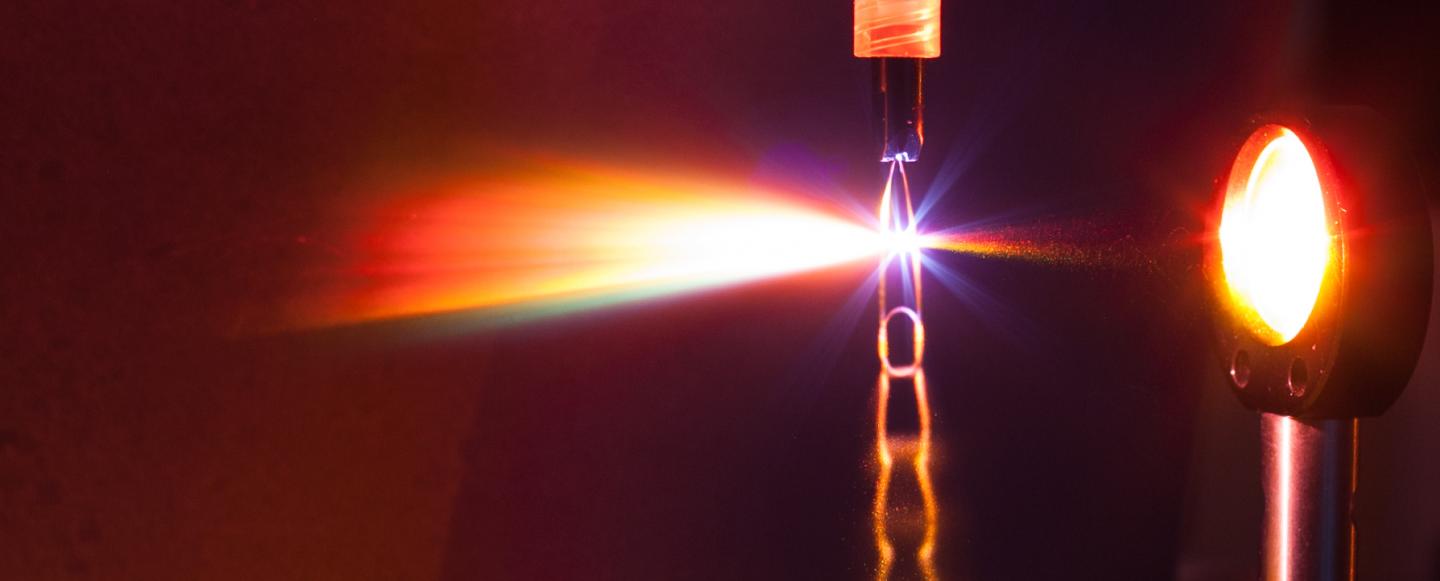
A research team from ITMO University and the University of Rochester (the USA) conducted a study on the formation of terahertz radiation in liquids. Previously, the generation of such radiation in a liquid medium was considered impossible due to high absorption. However, in their new research, the scientists described this phenomenon's physical nature and demonstrated that liquid radiation sources can be equally effective to traditional ones. The results have been published in Applied Physics Letters.
Terahertz electromagnetic radiation can easily pass through most materials except metals and water. Today, it is widely used in security systems used to detect illicit drugs and weapons, as well as for biomedical research. Most modern research involving terahertz radiation focuses on finding new, more stable, powerful and efficient sources.
The most common sources of terahertz radiation are solid materials. In addition, there are sources based on femtosecond laser filamentation in air and gases. In this case, a powerful laser beam creates a plasma in the gas medium by ionizing it so that free electrons generate electromagnetic terahertz radiation. Although doing the same in a liquid medium was until now considered impossible due to high absorption, an international research team from ITMO University and the University of Rochester showed the opposite. Their new study revealed that liquid, in fact, has a number of advantages over other sources such as gases.
"Until our colleague, Prof. Xi-Cheng Zhang, had been able to detect terahertz radiation in a liquid, it was believed to be impossible. But we demonstrated that, in terms of efficiency, liquid sources can approach solid-state sources, which are now considered to be the standard. Moreover, liquids are much easier to obtain than crystals. They can also withstand high pumping energy, which makes it possible to obtain a better output," explains Anton Tsypkin, Head of the Laboratory of Femtosecond Optics and Femtotechnology at ITMO University.
Usually, radiation is generated due to the release of free excited electrons during filamentation. The more electrons can be excited or ionized, the stronger the output terahertz radiation will be. The number of excited electrons of one molecule depends on the energy spent on the excitation or "pumping" of the medium. The difference between the required "pumping" energies in gas and liquid is small. At the same time, the density of molecules in a liquid is much higher than in a gas, so that a comparable pump energy makes it possible to excite more electrons and make the radiation stronger.
Scientists investigated the direction of terahertz radiation in the liquid. Experiments were conducted in parallel at two universities so as to eliminate errors. Then, the scientists verified the independently obtained results and worked together on a theoretical model to explain them. As a result, they managed to draw up and physically substantiate the radiation patterns of terahertz radiation in a liquid and its dependence on the angle at which the liquid collides with the pump radiation. According to the researchers, these results will be used in future work.
"A significant drawback of fluid is its large absorption. We plan to solve this problem by optimizing the type of fluid, the shape of the jet, the pump power and a number of other parameters. We want to experimentally find the optimal parameters for the radiation generation in different liquids, as well as to develop a theoretical model based on this data. It can be used to create a prototype device that will allow us to produce different types of terahertz radiation from liquids," says Xi-Cheng Zhang, co-director of the International Institute "Photonics and Optical Informatics" at ITMO University, and a researcher at the University of Rochester.
###
Reference:
"Terahertz wave generation from liquid water films via laser-induced breakdown" 
Yiwen E, Qi Jin, Anton Tcypkin, and X.-C. Zhang. 
Appl. Phys. Lett. Nov. 1, 2018
Disclaimer: AAAS and EurekAlert! are not responsi

Monday, August 20, 2018

Scientists create antilaser for ultracold atoms condensate


An international team of scientists developed the world's first antilaser for nonlinear Bose-Einstein condensate of ultracold atoms. For the first time, scientists demonstrated that it is possible to absorb the selected signal completely, even though the nonlinear system makes it difficult to predict the waves behaviour. The results can be used to manipulate superfluid flows, create atomic lasers, and also study nonlinear optical systems.

http://www.spacedaily.com/reports/Scientists_create_antilaser_for_ultracold_atoms_condensate_999.html
An international team of scientists developed the world's first antilaser for nonlinear Bose-Einstein condensate of ultracold atoms. For the first time, scientists demonstrated that it is possible to absorb the selected signal completely, even though the nonlinear system makes it difficult to predict the waves behaviour. The results can be used to manipulate superfluid flows, create atomic lasers, and also study nonlinear optical systems. The study was published in Science Advances.
Successful information transfer requires an ability to extinguish selected electromagnetic signal completely, without any reflection. This might happen only when the parameters of the electromagnetic waves and the system around them are coherent with each other. Devices that provide coherent perfect absorption of a wave with given parameters are called antilasers.
They have been used for several years in optics, for example, to create high-precision filters or sensors. The work of standard antilasers is based on the destructive interference of waves incident on the absorber. If the parameters of the incident waves are matched in a certain way, then their interaction leads to the perfect absorption with zero reflection
However, until now it was not clear whether such an absorption is possible in nonlinear systems, such as optical fiber transmitting high-intensity signal in strong external electromagnetic field.
The problem is that it is much more difficult to describe the interaction of the incident waves propagating in the nonlinear medium. At the same time, nonlinear systems are interesting due to their capability of controlling wave frequency and shape without energy loss. This can be useful for signal distinction in optical computers. However, the problem is that nonlinear systems often turn out to be unstable and predicting their behavior can be difficult.
In studying this problem, scientists from Russia, Germany and Portugal became the first to construct an antilaser for waves propagating in a nonlinear medium. In their experiments, scientists used a Bose-Einstein condensate of ultracold atoms. Bose-Einstein condensate is a peculiar state of matter which can be observed when the atomic gas is cooled to extremely low temperatures close to the absolute zero.
Under these conditions, a gas containing about 50,000 atoms condenses. This means that all atoms form a coherent cloud which supports propagation of matter waves. Strong repulsive interactions between the condensed atoms induce nonlinear properties in the system. For example, the interaction of waves ceases to obey the laws of linear interference.
To catch the condensate, scientists use a periodic optical trap formed by the intersection of two laser beams. A focused electron beam applied to the central cell of the lattice makes the atoms leak out from this cell. Atoms from neighboring cells go to the central cell, striving to make up for the leak. As a result, two superfluid matter flows directed toward the center are formed in the condensate. Once the flows meet in the central cell, they are absorbed perfectly, without reflection.
"The laws that describe the propagation of waves in various media are universal. Therefore, our idea can be adapted to implement an antilaser in other nonlinear systems. For example, in nonlinear optical waveguides or in condensates of quasiparticles, such as polaritons and excitons.
"This concept can also be used when working with nonlinear acoustic waves. For example, you can build a device that will absorb sounds of a certain frequency. Although such devices may not be made soon, we have shown that they are possible," notes researcher Dmitry Zezyulin, member of the International Laboratory of Photoprocesses in the Mesoscopic Systems at ITMO University.
Scientists currently plan to shift to nonlinear optical systems, where atoms will be replaced with photons.
"Photons, unlike atoms, are difficult to keep in the system for long. However, in this project, my colleagues managed to make a nonlinear atomic system behave as if it consisted of photons. At the same time, they managed to implement an ideal absorption in such conditions. This means that these processes are also possible in nonlinear photonic systems," adds Ivan Iorsh, the head of the International Laboratory of Photoprocesses in the Mesoscopic Systems at ITMO University.

Monday, December 5, 2016

Quantum dots offer new platform for fingertip terahertz devices


Credit: ITMO University
http://phys.org/news/2016-12-quantum-dots-platform-fingertip-terahertz.html
Scientists from Russia and the U.K. have developed an antenna that can aid in reducing sources of terahertz radiation down to the size of a fingertip. The antenna is a "sandwich" of semiconductor layers combined with quantum dots. The scientists demonstrated that such antennas provide a foundation for a new universal system capable of both transmitting and receiving terahertz radiation. Compact devices, operating at terahertz range, have applications in medicine and biology for tumor visualization and in the aerospace industry for high-speed communication systems. The study was published in Laser & Photonics Reviews.

The  lies between infrared and microwave spectra. Terahertz radiation can penetrate living tissues, but unlike X-rays, is not ionizing and poses no health hazard. Therefore, medical practitioners could benefit immensely from compact  scanners that can obtain pictures of tissues in living organisms.
Researchers from Aston University and ITMO University used  to develop an antenna that can significantly reduce the size of terahertz sources. The work was supported by scientists from the University of Strathclyde and University of Sheffield, as well as TeraVil Ltd company and Center for Physical Sciences and Technology in Vilnius.
"It was a technological challenge," says the study's academic supervisor Edik Rafailov, professor at Aston Institute of Photonic Technologies and leading research associate at ITMO University. "We demonstrated that quantum dots are a good alternative for conventional semiconductors. This new technology gives us an opportunity to generate terahertz at room temperature. And potentially make terahertz devices compact and cheap."


Credit: ITMO University
Today, terahertz generation relies on sources that involve conversion of infrared laser beam into terahertz. The transformation is carried out with intricate systems of waveguides, semiconductor crystals or diodes. The search for alternative ways of generating and detecting  is still underway, but such devices remain bulky, expensive and operate only at low temperatures.
The new antennas make it possible not only to use terahertz sources at room temperature, but also to miniaturize them. "We are able to create very compact sources of  the size of a fingertip," comments leading author of the paper Andrei Gorodetsky, researcher at the Department of Photonics and Optical Information Technology of ITMO University and research associate at Aston Institute of Photonic Technologies. "With the new antennas, we managed to remove the limitation associated with the narrow light spectrum that is used by current converts. This gives us an opportunity to combine the antennas with compact infrared lasers. Additionally, the antennas are 20 times more resistant to damage than typical semiconductor devices. Both factors allow us to incorporate the antenna into the laser instead of setting it apart."


Credit: ITMO University

The researchers suggest that their findings can be used in high-speed communication systems and also in compact terahertz scanners, which would give dynamic imaging of deep skin layers, embryo development, brain processes, and scanning of internal organs or tumors. Terahertz radiation is not harmful, as it does not scatter too much in biological tissues. As a result, terahertz systems are more informative, sensitive and fast compared to their substitutes from other parts of electromagnetic spectrum.


Credit: ITMO University


Credit: ITMO University

Wednesday, April 15, 2015

OBJECTS INVISIBLE WITHOUT METAMATERIAL CLOAKING


This is the radio-frequency anechoic chamber used for the experiment. Credit ITMO University
http://www.eurasiareview.com/14042015-objects-invisible-without-metamaterial-cloaking/

Physicists from ITMO University, Ioffe Institute and Australian National University managed to make homogenous cylindrical objects completely invisible in the microwave range.
Contrary to the now prevailing notion of invisibility that relies on metamaterial coatings, the scientists achieved the result using a homogenous object without any additional coating layers. The method is based on a new understanding of electromagnetic wave scattering. The results of the study were published in Scientific Reports.
The scientists studied light scattering from a glass cylinder filled with water. In essence, such an experiment represents a two-dimensional analog of a classical problem of scattering from a homogeneous sphere (Mie scattering), the solution to which is known for almost a century. However, this classical problem contains unusual physics that manifests itself when materials with high values of refractive index are involved. In the study, the scientists used ordinary water whose refractive index can be regulated by changing temperature.
As it turned out, high refractive index is associated with two scattering mechanisms: resonant scattering, which is related to the localization of light inside the cylinder, and non-resonant, which is characterized by smooth dependence on the wave frequency. The interaction between these mechanisms is referred to as Fano resonances. The researchers discovered that at certain frequencies waves scattered via resonant and non-resonant mechanisms have opposite phases and are mutually destroyed, thus making the object invisible.
The work led to the first experimental observation of an invisible homogeneous object by means of scattering cancellation. Importantly, the developed technique made it possible to switch from visibility to invisibility regimes at the same frequency of 1.9 GHz by simply changing the temperature of the water in the cylinder from 90 °C to 50 °C.
“Our theoretical calculations were successfully tested in microwave experiments. What matters is that the invisibility idea we implemented in our work can be applied to other electromagnetic wave ranges, including to the visible range. Materials with corresponding refractive index are either long known or can be developed at will,” said Mikhail Rybin, first author of the paper and senior researcher at the Metamaterials Laboratory in ITMO University.
The discovery of invisibility phenomenon in a homogenous object and not an object covered with additional coating layers is also important from the engineering point of view. Because it is much easier to produce a homogeneous cylinder, the discovery could prompt further development of nanoantennas, wherein invisible structural elements could help reduce disturbances. For instance, invisible rods could be used as supports for a miniature antenna complex connecting two optical chips.
The subject of invisibility came into prominence with the development of metamaterials – artificially designed structures with optical properties that are not encountered elsewhere in nature. Metamaterials are capable of changing the direction of light in exotic ways, including making light curve around the cloaked object. Nevertheless, coating layers based on metamaterials are extremely hard to fabricate and are not compatible with many other invisibility ideas. The method developed by the group is based on a new understanding of scattering processes and leaves behind the existing ones in simplicity and cost-effectiveness.